
Mountain View City Directory Shelves
The defensible Mountain View city directory record is a set of identified runs with gaps shown. County and suburban editions do not guarantee a volume for every year. A catalog entry confirms that a collection exists, but staff should confirm the particular volume before a trip.
| Collection | Years or span | Where held | Access |
|---|---|---|---|
| R.L. Polk San José and Santa Clara County directories | 1949/50-1952; 1952-1954; 1954-1955 | Gale bibliography and participating research libraries | Microfilm or library reference |
| Polk’s Mountain View City Directory | 1962-1966 | Santa Clara County Library, call R 917.947 MOUNTAI | Reference and in-library use |
| Mountain View directories | 1962-1968 | San José Public Library California Room | Confirm volumes with the room |
| Haines San Jose, Santa Clara County Criss-cross | Begins in the 1970s; catalog includes at least 2018 | Santa Clara County Library | Address and telephone reverse form |
| History Center directories and phonebooks | Years not fully cataloged online | Mountain View History Center | Appointment or limited open hours |
Gaps matter. The county sequence has 1951 and 1953 omissions in the listed runs. The History Center publishes a small directory collection and a larger phonebook collection, but not a complete annual catalog. The strongest search record states the known years and asks staff about the missing ones.
Where Mountain View City Directories Live
The Mountain View Public Library History Center is on the second floor at 585 Franklin Street. It is a working local-records desk with books, maps, photographs, documents, ephemera, city directories, phonebooks, newspapers, and high-school yearbooks. Materials do not circulate. Hours are Tuesday from 1 to 5 p.m., Thursday from 4 to 8 p.m., or by appointment. The Center lists 650-903-6890 during open hours, 650-903-6887 otherwise, and libraryadultservices@mountainview.gov.
The San José Public Library California Room holds Mountain View volumes from 1962 through 1968, while Santa Clara County Library holds the standalone Polk reference volumes and Haines material. The Mountain View Historical Association shares the History Center partnership and contributes scrapbooks, diaries, photos, maps, artifacts, and yearbooks. A catalog search should end with a call or email because serial records do not promise every annual volume.
The History Center collection page and the Historical Association archive description are linked to the image below. They show why a city directory search may need a shelf visit rather than a standard web query.
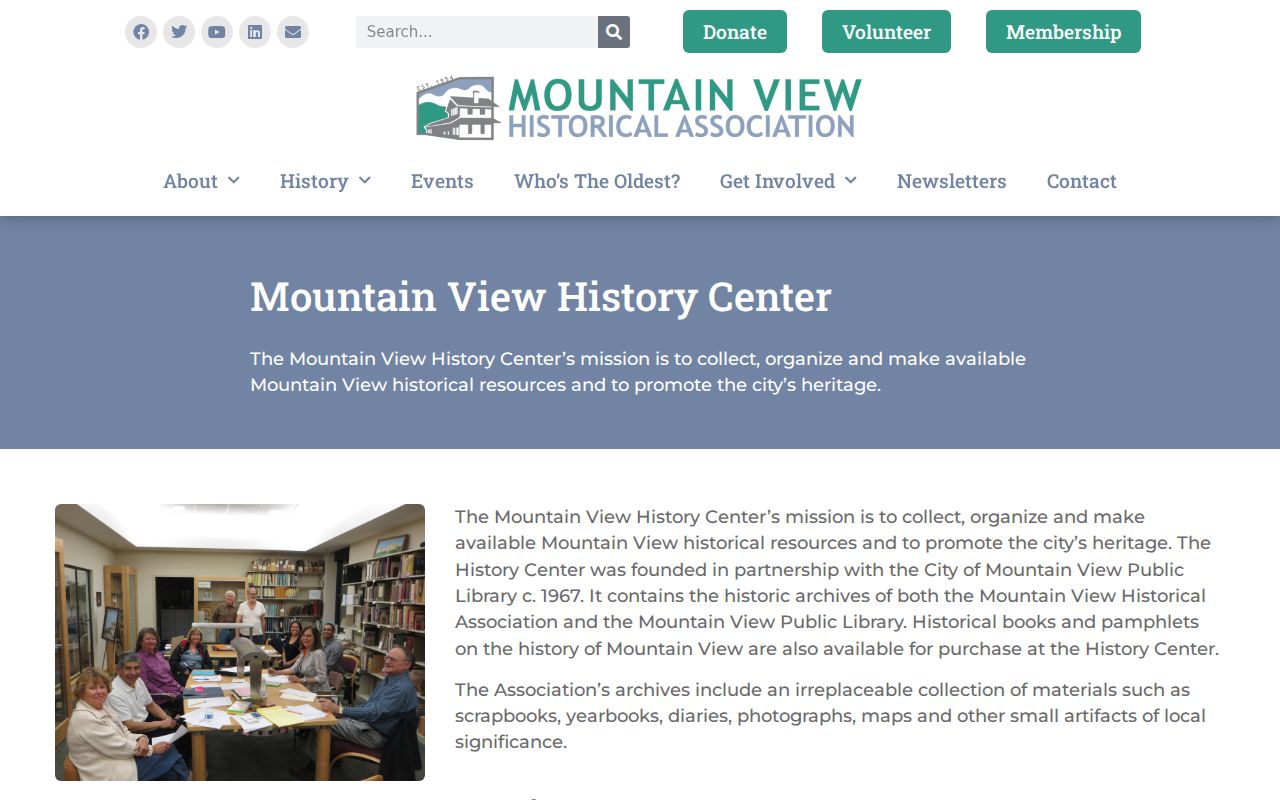
The local archive is especially valuable when a directory line needs a newspaper, map, obituary, or yearbook beside it.
Mountain View Directory Years and Gaps
R.L. Polk’s county and suburban publications are useful for the postwar transition but should not be described as uninterrupted Mountain View city directories. The listed sequence has 1949/50 through 1952, a 1951 gap, 1952 through 1954, a 1953 gap, and 1954 through 1955. A 1954 San Jose City and Suburban edition names Mountain View while excluding Palo Alto in its coverage description.
Standalone Mountain View Polk material is listed for 1962 through 1966. San José Public Library’s California Room reports local coverage through 1968. Haines and Pacific Bell reverse directories reach from the mid-1960s, but the exact annual Mountain View run is not published. The year of a volume is therefore a fact to verify, not a blank to fill by assumption.
Digital access is uneven. Ancestry’s U.S. City Directories can be a licensed route, while Gale bibliography and library catalogs describe the print and microfilm holdings. The San José directory guide and the Santa Clara catalog help locate the shelf; neither changes the coverage gaps.
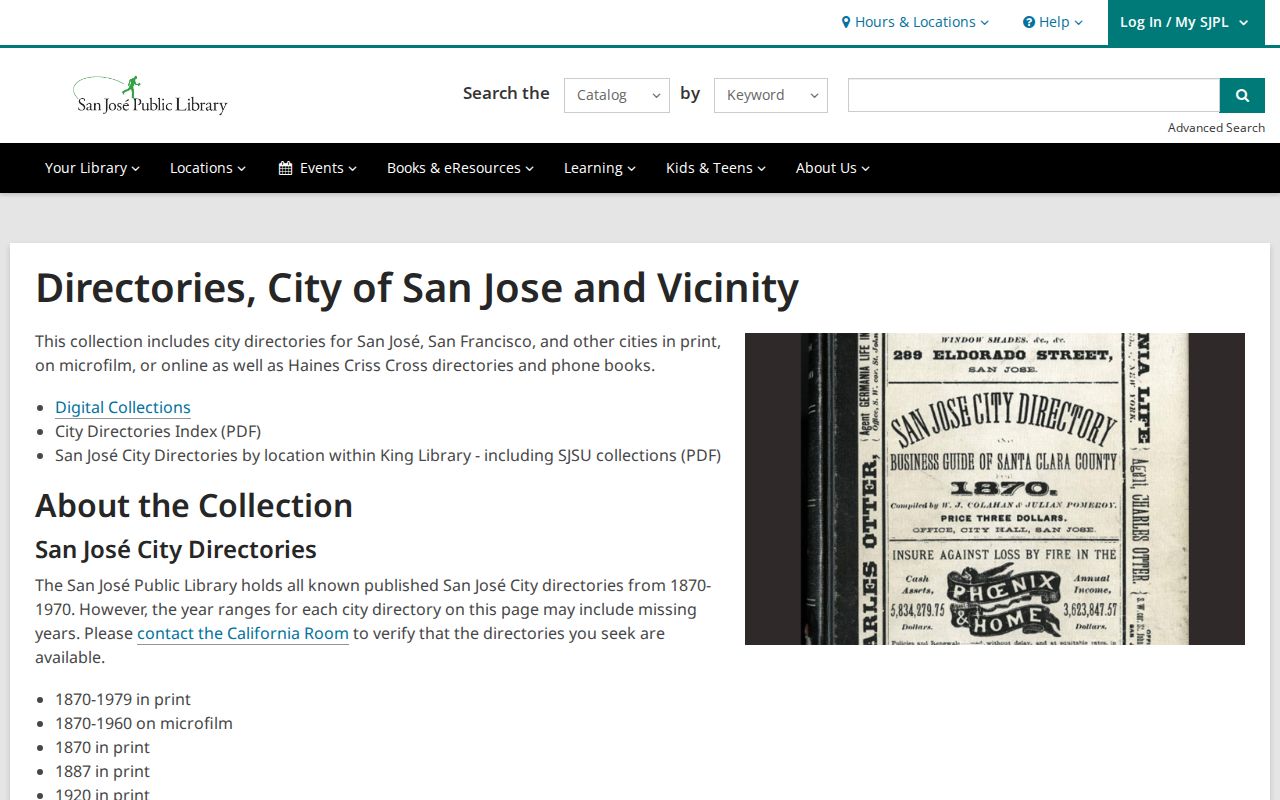
The catalog image is useful before travel because it points to the collection trail, not just a search box.
Reading a Mountain View City Directory Entry
No openly accessible official page preserved a sample Mountain View resident entry during research. The standalone volumes are in-library or database-gated. A researcher should ask History Center or library staff to inspect a 1962 page and its abbreviation key before quoting a local layout as certain. The typical fields supported by the local catalog guidance are still a useful reading frame.
| Name | Person listed in the alphabetical section; a spouse may appear in parentheses when the volume uses that form. |
|---|---|
| Residence | Street and number, often paired with a residence marker or a householder sequence. |
| Occupation | Work or business affiliation, sometimes with an employer. |
| Ownership mark | Some runs mark a property owner; confirm the local symbol rather than assuming one. |
| Telephone | May appear in phonebook or reverse material, subject to the year and collection. |
- Criss-cross directory
- An address-first section arranged by street and house number, useful for moving from a place to a listed name.
- Householder index
- An address or household sequence that can connect a head of household to a street entry.
- Abbreviation key
- The front-of-volume guide that explains marks for residence, occupation, marital status, or other local conventions.
Read the entry as a dated clue. It may show a listed person and address, but the line does not establish legal ownership or current occupancy. A second volume, census schedule, newspaper notice, deed, or obituary can support the identity.
Mountain View Reverse City Directories
Later Haines and Pacific Bell books change the direction of the search. An alphabetical city directory starts with a name and points to an address. A criss-cross directory starts with a street and number and points to a listed occupant or telephone clue. Santa Clara County Library catalogs a Haines reference volume at R 917.947 HAINES, while the California Room describes reverse directories covering cities and unincorporated areas outside San José.
The reverse form is helpful for an older street directory search, but it is not a complete household roll. It can omit people, use an old number, or carry a name that reflects a phone listing rather than every occupant. Compare it with the Polk alphabetical section and the year’s newspaper or census record.
Street history is part of the reading. Pastoria Avenue became Rengstorff Avenue in 1929, so a pre-change directory and a later reverse volume can describe the same corridor with different names. Search both labels before deciding that an address vanished.
Newspapers Complete Mountain View Directories
Historical newspapers give a city directory entry a date and a social setting. DigitalReel is available on Library computers or devices connected to cmvlib Wi-Fi, with five simultaneous users. Its Mountain View runs include the Mountain View Register Leader from 1903 through 1964, the Mountain View Daily Register from 1953 through 1956, the Mountain View News Herald from 1969 through 1970, and later Valley Journal material through 1979, with several title changes in between.
The obituary database uses Name, Date, and Keyword modes. Most coverage is 1967 through 2004. A result gives the deceased name, paper and date, people mentioned, and a clipping call number. The full clipping is onsite. A useful search can begin with an heir or spouse as a mentioned person, then move to the notice instead of searching only the deceased.
The local newspaper guide explains access limits and title runs. Newspapers can reveal a move, marriage, civic role, sale, death, or address event that a directory line alone cannot explain.
Mountain View City Directory Companions
Mountain View High School yearbooks from 1904 through 1929 went online by June 2025 through a California Revealed project. They carry student and faculty names, photographs, activities, local business advertisements, and snapshots of World War I and the 1918-19 influenza period. Later physical yearbooks remain part of the History Center holdings, along with smaller Los Altos and St. Francis runs.
The 1950 census is the latest public decennial schedule under the 72-year rule. NARA’s search divides Mountain View among street-defined Fremont Judicial Township enumeration districts, including 43-15 through 43-19. A directory address can identify the likely district, after which the schedule can show household relationships, age, birthplace, and occupation for that census date.
The two tools answer different questions. A yearbook reconnects a class or school community. A census pairs a street with a household at a set moment. Neither should be stretched into a current directory.
The NARA 1950 census search is the first schedule route shown below. Use the street-defined enumeration district as the bridge from a directory address to a household record.
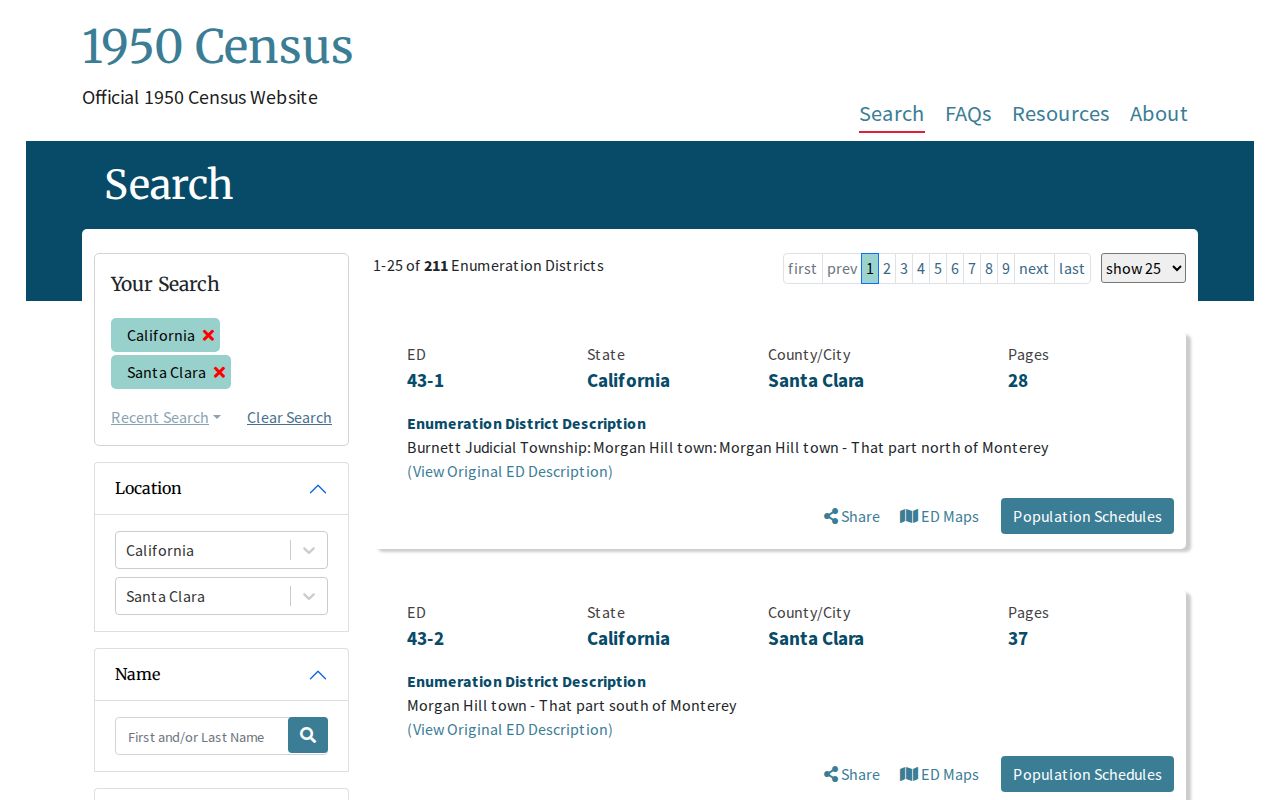
The 1950 census search image shows the street-defined geography that lets a historical address lead to the right schedule.
The NARA San Francisco genealogy guide is the broader archival route represented by the second image. It helps extend a directory trail into naturalization, passenger, death-index, draft, and pension materials.
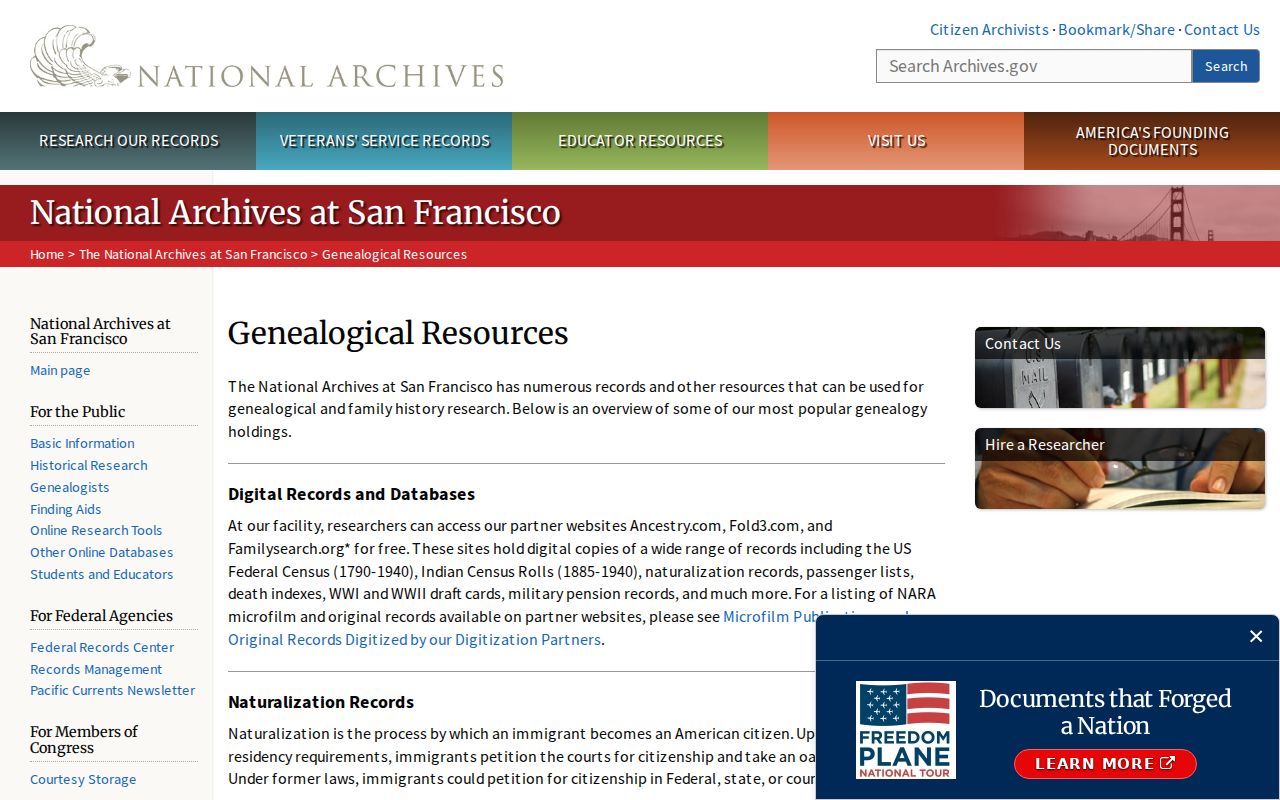
NARA San Francisco adds census, naturalization, passenger, death-index, draft, and pension resources for a deeper family-history search.
Mountain View Directory Names in County Indexes
Santa Clara’s Naturalization Index is a useful companion when a city directory name belongs to an immigrant family. It covers about 8,000 people from 1850 through 1934 and exposes Last Name, First Name, Nationality, Date of Admission, Court, Book, and Page. The actual files are at Superior Court. Declarations of intention from 1850 through 1930 were microfilmed for Family History Centers and the State Archives.
Use a directory name and address as a lead, then compare the naturalization fields with a census, newspaper, obituary, or family record. A shared surname alone is not enough. Court and archival indexes can be incomplete, and the person named in a directory may not be the same person as a naturalization entry with similar spelling.
The County Naturalization Index is linked from the image. Its field set demonstrates the value of a named archival index while keeping the underlying file and identity question separate.
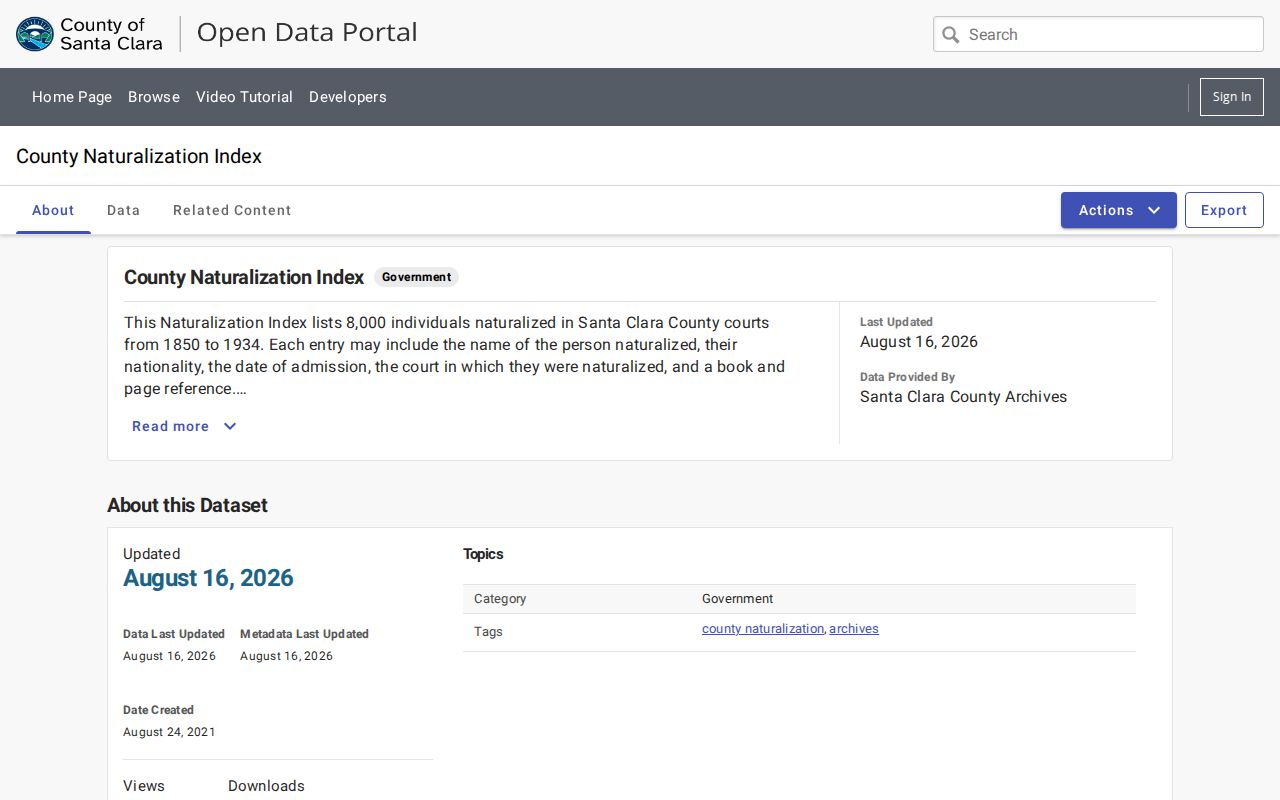
A county index can add nationality, court, and admission clues to a directory trail. It does not replace the underlying file.
Mountain View City Directory Milestones
The local record story has several useful points in time. They help choose a collection before the search begins.
- 1949/50-1955: selected R.L. Polk county and suburban editions cover Mountain View, with documented gaps.
- 1962-1966: standalone Polk’s Mountain View volumes are listed at Santa Clara County Library.
- 1962-1968: San José Public Library’s California Room reports Mountain View directory coverage.
- Mid-1960s onward: Haines and Pacific Bell reverse forms add street-first clues, with exact local annual runs to confirm.
- 2025: Mountain View High School yearbooks from 1904-1929 become available online.
The timeline is a research aid, not a claim that every year contains a volume. Ask the holding library about the exact edition and page sequence.
Trace a Mountain View City Directory Household
A city directory becomes stronger when paired with a census and a second record type. The aim is to explain a household’s movement, not to force one name through every decade.
- Find the earliest plausible alphabetical entry and copy the full name, address, occupation, spouse clue, and any symbol.
- Check the next available edition, recording the address change and every gap in publication.
- Flip to the criss-cross section for the same street and number, then compare the listed occupant.
- Use the address to select the 1950 census enumeration district or a newspaper search date.
- Close the trail with an obituary mentioned-person search, will, probate case, map, or recorded deed when the question requires it.
A disappearance can mean a move, death, omission, a new listing format, or a missing volume. An obituary may show the death date and associated relatives. A deed shows legal parties. A census shows the household on one date. The Mountain View resident lookup can take over when a historic name needs a modern identity check.