
Mountain View ZIP Codes at a Glance
Every label in this local ZIP code directory plays a different role. USPS materials place 94035 and 94039 through 94043 in the Mountain View family. Some describe real city neighborhoods. Others are mainly post-office or institutional clues. The table keeps those two kinds of geography apart.
| ZIP | Areas covered or role | Post office evidence | Notes |
|---|---|---|---|
| 94035 | Moffett Field and NASA federal campus, northeast | Moffett Field, 67 N. Akron Drive | Special campus geography, not ordinary citywide residential coverage |
| 94039 | Institutional or post-office box Mountain View mail | City use of P.O. Box 7540 | Do not treat it as a neighborhood polygon |
| 94040 | South and west Mountain View; Bubb, Castro, Cooper, Graham, Huff, McKelvey facilities | Main Post Office, 211 Hope Street, after station change | ZIP retained while service classification shifted |
| 94041 | Downtown and central Mountain View | Mountain View Main, 211 Hope Street | City Hall, Library, Eagle, Landels, and Sylvan context |
| 94042 | Post-office box and bulk-mail evidence | City newsletter used P.O. Box 395 | No verified street-delivery geography |
| 94043 | North and east, including North Bayshore, Monta Loma, Rex Manor, North Whisman vicinity | Carriers Annex, 1070 La Avenida Street | Carrier, industrial, and northeast coverage |
A shared ZIP label does not mean every address inside it shares one land-use or household pattern. Check exact delivery with USPS.
94035 Marks Moffett Field Geography
ZIP 94035 belongs to Moffett Field and the NASA federal campus in northeast Mountain View. That makes it a poor shortcut for ordinary city residence. A name or address carrying 94035 may point to federal-campus mail. It could also signal institutional activity or a special delivery route rather than a home. The label alone proves very little. It does not show that a person lives inside the City of Mountain View. It does not show that a nearby parcel sits in the same service area.
Treat the ZIP as a postal clue. Then verify the situs address and jurisdiction in County GIS or the Assessor. For a parcel question, save the APN. For a person, seek an independent official record. The Assessor, Recorder, and voter self-lookup offer no ZIP-wide people search.
The Census ZCTA guidance shows why a statistical ZCTA only approximates mailing ZIP geography. A ZIP code directory should never turn a statistical area into a list of residents.
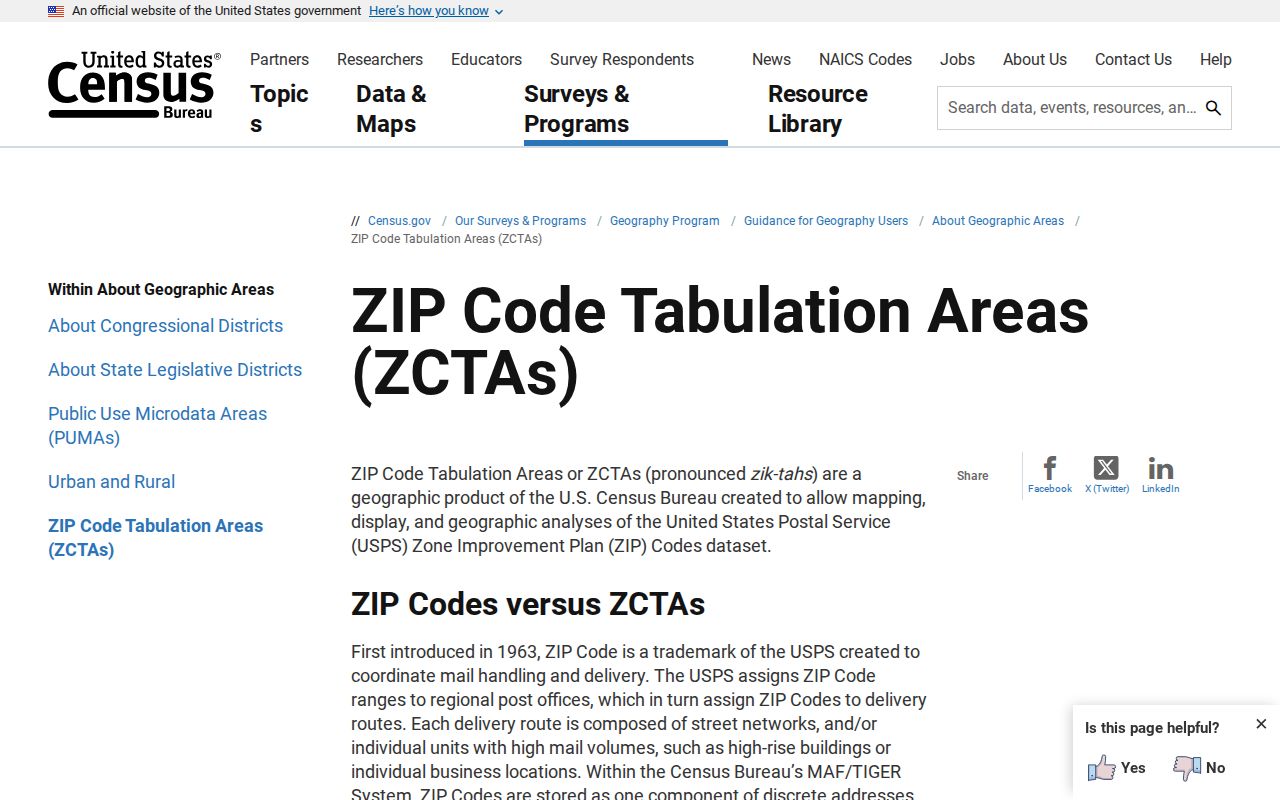
The USPS and Census distinction matters most: postal delivery areas and statistical areas can resemble each other without matching exactly.
94039 and 94042 Are Mail Clues
ZIP 94039 shows post-office or institutional use, including the City's P.O. Box 7540. ZIP 94042 likewise appears in P.O. Box or bulk-mail use, including a City newsletter address at P.O. Box 395. Neither label carries verified street-delivery geography. No neighborhood, block, or resident group should be assigned from either one.
Post-office box ZIPs are strong for sending a request or spotting a mailing channel. They are weak for locating a home. Keep the mailing address and the physical property separate. Then turn to the address-keyed Assessor or County map when the record question concerns land.
That distinction sits at the heart of a Mountain View ZIP code directory. A ZIP can appear on a letterhead, a business filing, or an agency contact. It says nothing about where the named person lives.
94040, 94041, and 94043
ZIP 94040 serves south and west Mountain View. Its local facilities include Bubb, Castro, Cooper, Graham, Huff, and McKelvey. ZIP 94041 covers the downtown and central area around City Hall, the Library, Eagle, Landels, and Sylvan. ZIP 94043 handles north and east areas. It includes North Bayshore and the Monta Loma, Rex Manor, and North Whisman vicinity. These descriptions help with a first map view. Still, a ZIP boundary remains a mailing boundary.
On September 5, 2024, USPS changed the Blossom Valley station classification. It kept 94040 addressing and shifted services toward the Main Post Office at 211 Hope Street. That postal change did not create a new city. It also did not turn an address into a resident record.
City-limit questions belong with the County parcel map, City zoning, or a legal description. Delivery questions belong with USPS. People questions need a record keyed to a name, parcel, case, or historic source.
The USPS September 5, 2024 postal bulletin documents the 94040 classification change. Keep that service date separate from the ZIP's continuing address role.
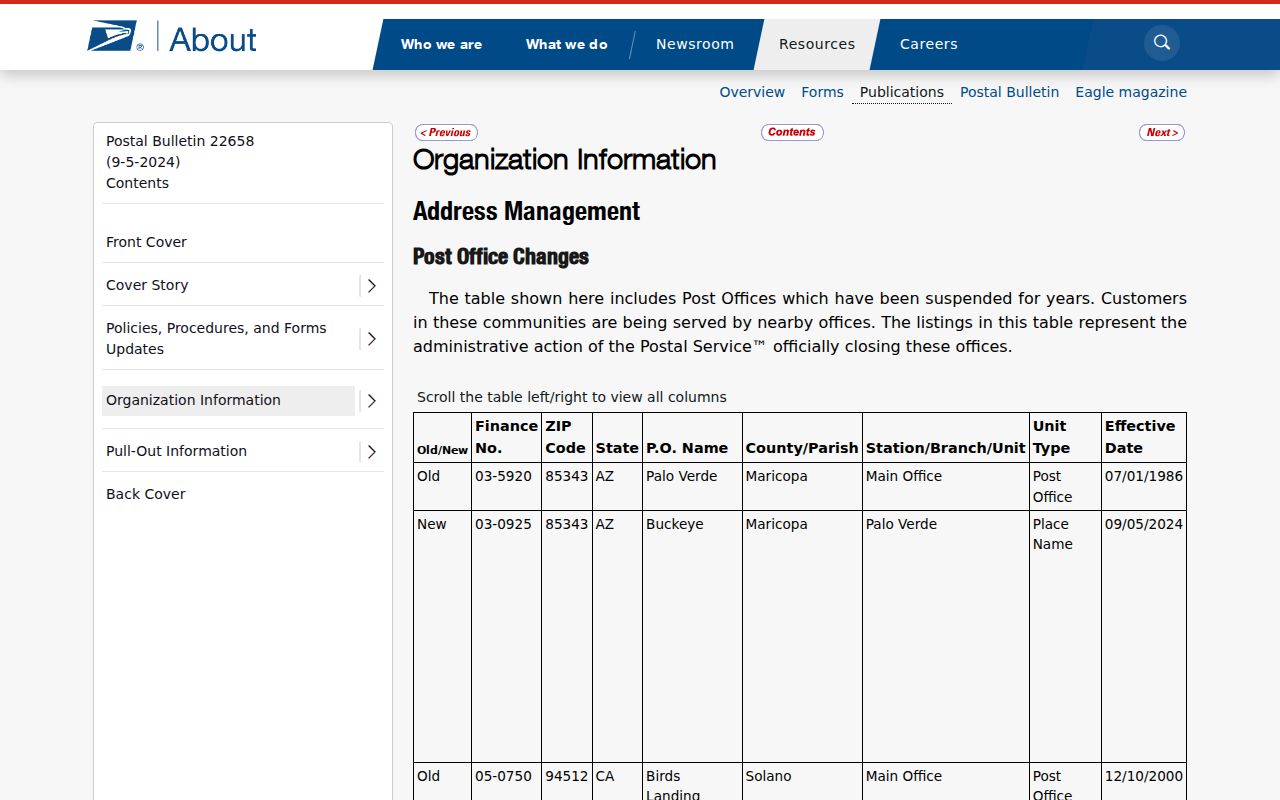
The postal bulletin records a classification change without a ZIP change. Dates and source type belong right beside the label.
Finding Mountain View Residents by ZIP Code
A ZIP can narrow the first step. But no local portal offers a ZIP-wide resident or owner search. The Assessor has a city field and no ZIP filter. The Recorder has no address or ZIP key. The voter tool is identity gated. Use a ZIP as a sorting clue. Then move to an exact address or a name-based official source.
- Verify the complete mailing address with the USPS ZIP Lookup.
- Decide whether the ZIP is geographic, federal-campus, carrier, or post-office evidence.
- If a property is known, search the situs address or APN in the County Assessor and save the parcel facts.
- Use County Property Explorer or City zoning to test the land boundary and nearby parcel context.
- If the question is about one person, use a court, license, business, vital, or historical source that matches the person and date.
Once a ZIP narrows the area to a street, the Mountain View by-street directory takes over. It follows the address and parcel chain. It does not treat every ZIP label as a resident list.
The USPS city-and-state ZIP lookup is the official service tool. It covers delivery checks, not people searches. Recheck an exact address whenever a facility, carrier route, or postal designation has changed.
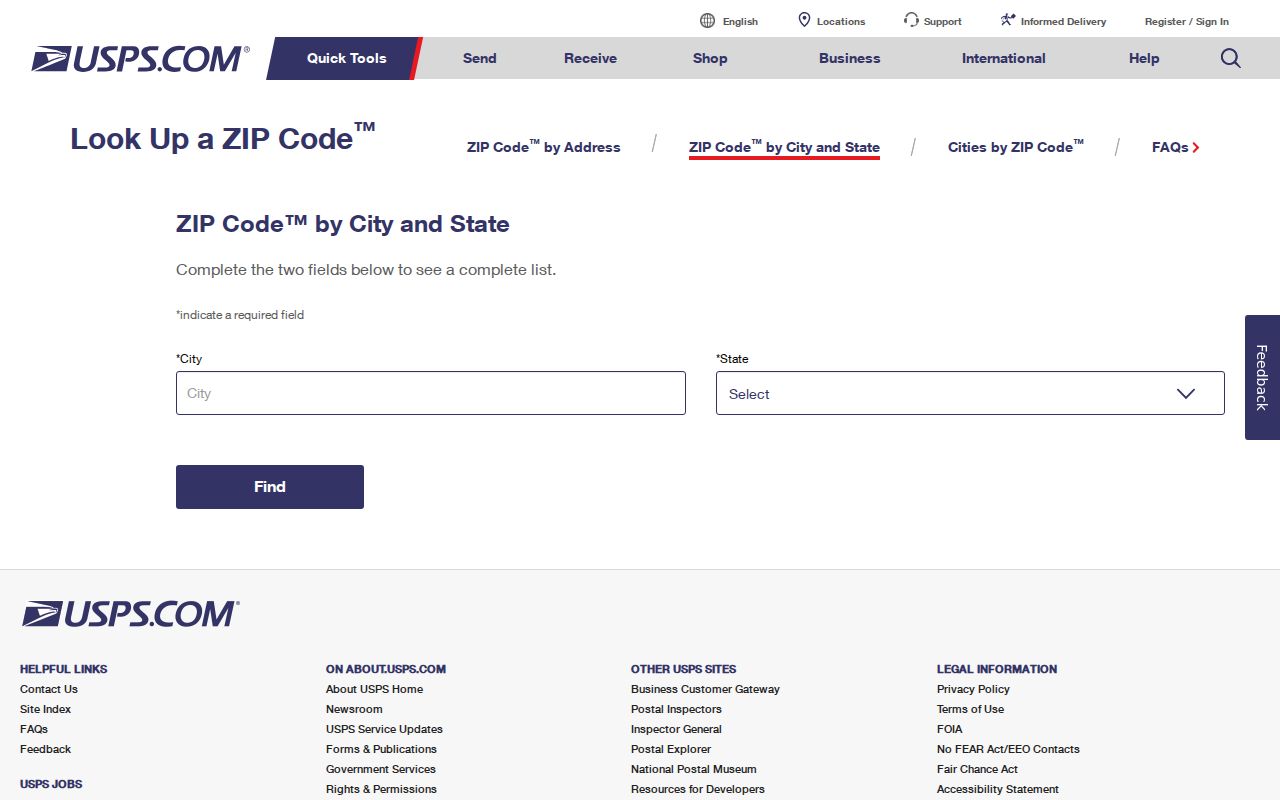
Note: Save the exact-address result with its date checked, because postal service details can change.
Which Mountain View Portals Filter ZIP?
None of the main Mountain View resident-record portals filter by ZIP. That is the honest answer. The Assessor's advanced search works from street number, direction, street name, type, unit, city, or APN. Each of those fields alone narrows a search. The Recorder indexes party names, document or instrument numbers, and book-and-page references. You look up those references at the office. My Voter Status only lets a voter check their own registration. City zoning and the Property Explorer both rely on an address or a map pick. A ZIP code directory for Mountain View has to say "verify the exact address". It cannot promise a hidden ZIP filter. The parcel key and the street address drive every one of these tools. The postal code does not.
| USPS | Confirms mailing ZIP for a complete address. |
|---|---|
| Assessor | Confirms parcel by situs address or APN; no ZIP-wide public filter. |
| Recorder | Confirms deed parties through office index mechanics; no ZIP key. |
| GIS and zoning | Shows parcel and land-use context by map or address; not a people list. |
| Voter status | Self-record lookup; not browseable by ZIP or name. |
That limitation is itself useful. It keeps a postal label from standing in for a government residents directory and keeps each lookup tied to the way the records are actually organized.
ZIP Boundaries and Mountain View Limits
A ZIP code boundary and a city boundary answer different questions. The federal-campus role of 94035, the post-office evidence behind 94039 and 94042, and the overlapping service areas around 94040 and 94041 all show the limits of a mailing label. A mailing label cannot settle City jurisdiction. Census ZCTAs are statistical areas built to approximate ZIP geography. They are not legal city boundaries, parcel lines, or household files.
For land context, the County GIS viewer offers one route. The Property Explorer, or a City zoning map, is the better stop. Save the legal description and APN when a parcel is at issue. If you file a public-record request, name the custodian. Give the physical address rather than asking for everyone in a ZIP.
Boundary check. A Mountain View mailing line does not by itself prove City jurisdiction. Confirm the exact address, parcel, and custodian before relying on a ZIP code result.
The result is a more precise ZIP code directory. Postal geography narrows the question, and a parcel or official name source supplies the actual record.
Mountain View Population Is Not ZIP Population
Census QuickFacts counts 82,376 Mountain View residents in the 2020 census. It estimates 85,438 on July 1, 2025, across 11.96 square miles. The 2020 density came to 6,888.8 people per square mile. From 2020 through 2024, QuickFacts also reports 35,767 households. It lists 2.33 persons per household. Owner occupancy sits at 38.6%. Those are citywide figures. They are not counts for each ZIP code. They are not a list of named residents.
They still explain why ZIP shortcuts mislead. Mountain View packs federal-campus, downtown, post-office, carrier, apartment, and single-family geography into a compact city. A ZIP label can describe mail service. It does not describe any one household type or neighborhood boundary.
The Census QuickFacts table appears beside the image. It supplies scale, while USPS and parcel tools supply the address detail.
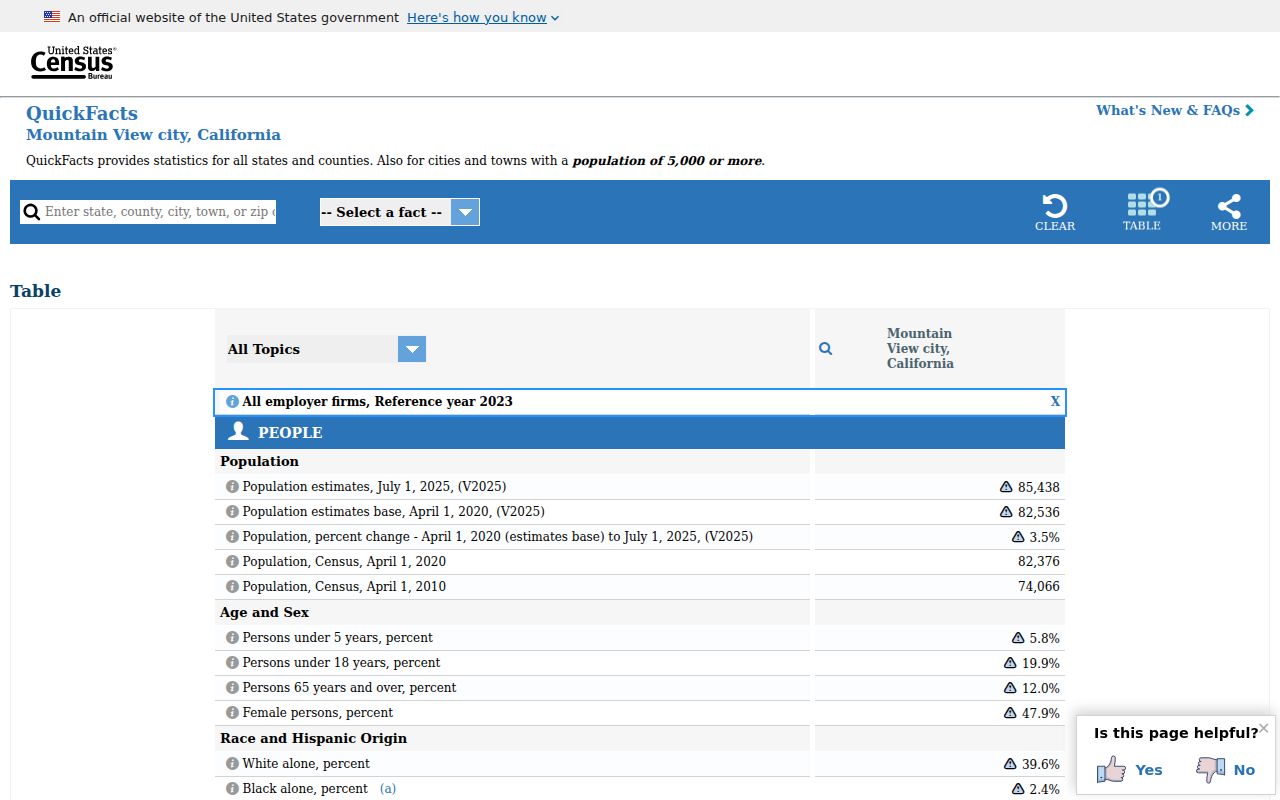
Citywide numbers set useful context. But never divide them across ZIP labels without a source that actually reports ZIP-level data.
ZIP Terms for Mountain View Searches
Plain postal vocabulary keeps a ZIP code directory from overpromising. A ZIP code marks a USPS delivery area. ZIP+4 narrows that to a finer delivery segment. A PO-box ZIP routes mail to a box rather than a street neighborhood. A unique or institutional ZIP serves a defined organization or campus. Such a ZIP might mark a federal facility. A carrier route is a delivery path, not a resident roster. No postal term alone names past residents.
- ZIP code
- USPS delivery geography used to route mail.
- ZIP+4
- An added four-digit extension that narrows delivery within a ZIP.
- PO-box ZIP
- A postal label associated with post-office boxes or bulk mail, not necessarily street delivery.
- ZCTA
- Census statistical geography that approximates ZIP areas and should not be treated as a legal boundary.
- Situs address
- The physical property location used by parcel and assessment searches.
Match the tool to the question. For a person, record the mailing address and the physical address separately. For a parcel, use the situs and the APN. For a historic question, add the old street name and the directory year. Each path yields a real ZIP clue. None of them dresses postal data up as a resident list.
Verify One Mountain View ZIP Address
A three-source check finishes the job. USPS confirms delivery. The Assessor confirms the parcel key. County or City maps confirm the land context. A resident lookup or a historical city directory can then test the person and the date, if that is the real question.
- Run the full address through USPS and save the returned ZIP and ZIP+4 if provided.
- Search the same situs in the Assessor, accepting the terms and recording the APN.
- Place the parcel in the County map or City zoning viewer and check whether the city context matches the mailing line.
- Use the matching name, court, license, deed, or historical source only after the geography is clear.
This workflow keeps the Mountain View ZIP code directory honest. It navigates well while admitting what postal geography cannot show. If the answer is a named street, follow the address record chain instead of reading a ZIP as a household.