
What a Mountain View Resident Lookup Confirms
The first choice in a resident lookup is the fact being tested. Property evidence, court metadata, a vital copy, and a business filing do not carry the same weight or answer the same question. Use this coverage table to select a custodian before entering a name into several unrelated systems.
| Record | What it can confirm | Where | Access |
|---|---|---|---|
| Assessor parcel | Address, APN, value, transfer reference, possible owner-occupancy exemption | Santa Clara Assessor | Address or APN portal; owner names omitted online |
| Recorded deed | Named legal parties, date, legal description | Clerk-Recorder | Office index, workstation, or copy order |
| Superior Court case | Party role, case type, filing date, events, public documents when allowed | Santa Clara Court | Free index with category limits |
| Vital record | Birth, death, public marriage, or divorce event facts | County, CDPH, or court | Eligibility and copy type control access |
| License or entity | Professional status, business affiliation, agent or filing information | DCA or Secretary of State | Free public index; verify with the issuing office |
| Obituary, will, or probate | Death, relatives, heirs, residence, estate clue | History Center, County Archives, or court | Index plus onsite or file retrieval |
A strong match usually has two independent anchors. A name and city are weak. A name paired with an address, spouse, occupation, case role, or date is more useful. The result still remains a lead until the custodian confirms what the record means.
Cross-Check a Mountain View Resident
Same-name errors are the central risk in a Mountain View resident lookup. A court party may share a name with a business owner. A directory entry may belong to an older relative. An obituary can mention several people with the same surname. Do not merge records because a search result looks close.
- Write down the exact name form, middle initial, spelling variants, and the date or era attached to the clue.
- Find a second anchor in the same source, such as a street, spouse, occupation, case type, business number, or county.
- Check an independent record keeper. Pair a directory address with a census, a business entity with a City license, or an obituary name with a will or probate file.
- Mark uncertainty when a record shows only an affiliation, mailing address, or listed name.
- Ask the clerk about index mechanics and availability, not whether two private people are the same person.
This process is slower than collecting every hit, but it creates a traceable reason for each match. It also prevents a public index from becoming a private conclusion.
Mountain View Resident Court Parties
The Superior Court of California, County of Santa Clara Public Portal is one of the most useful name sources in a Mountain View resident lookup. It searches case number, party, business, and a five-day filing-date range across civil, criminal, family, probate, and traffic categories. A result may show a case number and title, filing date, category, parties, department, events, hearings, and documents when electronic access is permitted.
| Case number | Five to sixteen alphanumeric characters. |
|---|---|
| Party search | First name and last name fields; last name is needed for a practical party query. |
| Business name | Separate business search mode. |
| Filing dates | Date From and Date To in MM/DD/YYYY format, with a maximum five-day range. |
| Case type | Civil, Criminal, Family, Probate, or Traffic. |
Criminal index coverage begins in 2004. A pre-2004 criminal search uses courthouse microfiche by defendant name, date of birth, and likely filing year. Palo Alto Courthouse handles criminal matters originating in Mountain View, Cupertino, Palo Alto, and Sunnyvale. A clerk copy request works best with a case number, title, document name, and filing date. Copies are generally $0.50 per page; a search without a known number can carry a fee.
The Palo Alto Courthouse information is linked to the image. It anchors the local court route without claiming that every Mountain View case is filed at one building.
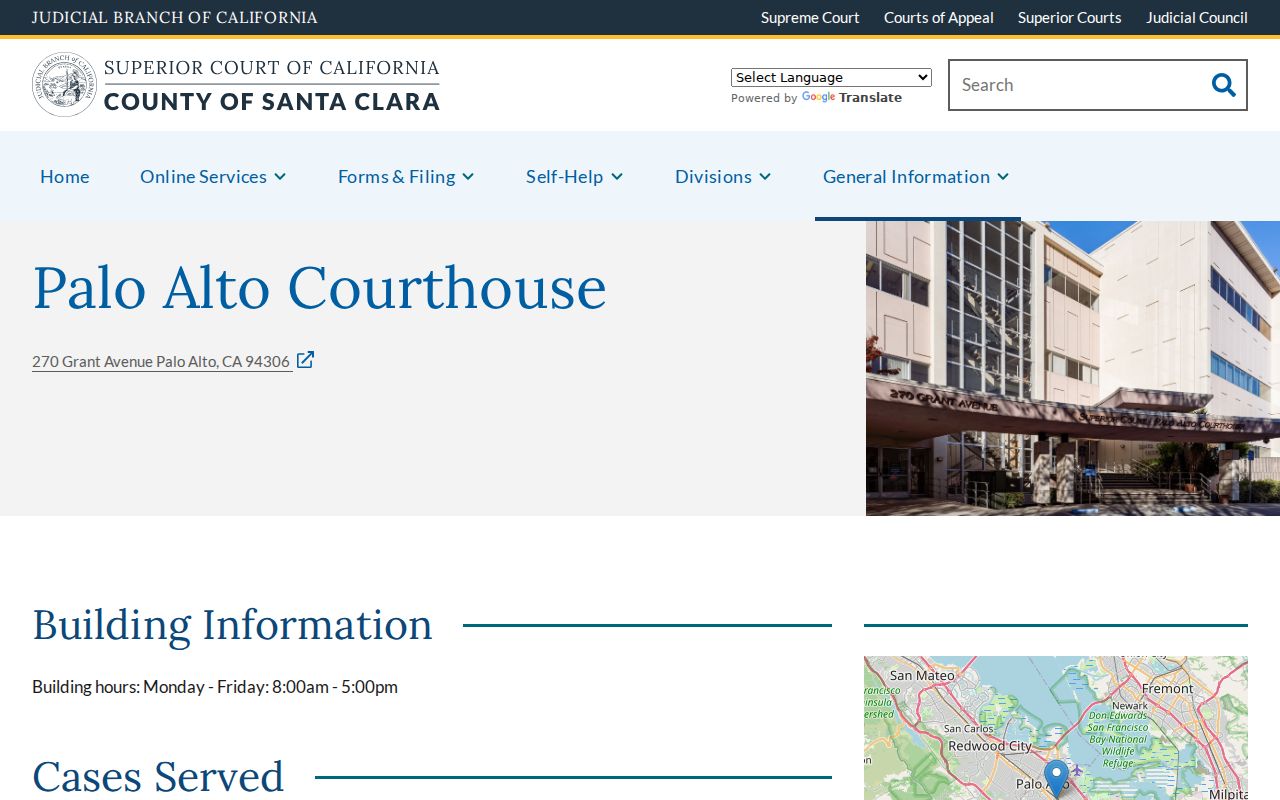
The court image is an access clue. The public portal remains an index, and confidential, sealed, juvenile, adoption, and protected records stay outside the ordinary result.
Federal matters use the U.S. District Court for the Northern District of California and PACER, not the county portal. PACER charges $0.10 per page, generally caps a single document at 30 pages, and waives a quarterly bill of $30 or less. Federal and county results should not be blended simply because a party name matches.
The U.S. District Court for the Northern District of California is the official district source shown below. Confirm the district, case number, and party role before treating a federal result as a match.
The district-court image marks the boundary between a county resident lookup and a federal docket search.
For a federal filing or document, use PACER after identifying the district and case. PACER charges $0.10 per page, generally caps a single document at 30 pages, and waives a quarterly bill of $30 or less.
The PACER image is a federal-access clue only. Keep its docket number, district, filing date, and party role separate from a county case result.
Mountain View Resident Vital Clues
California vital access is not a simple rule that releases every birth after a fixed age and every death after another. Santa Clara County supplies county birth and death records for available years and public marriages. CDPH is the statewide custodian. Current-year and prior-year births and deaths also have a County Public Health local-registrar route.
Authorized certified copies require the relationship or role listed by law, a sworn statement, and, for a mailed authorized birth application, notarization. A certified informational copy can be available to someone without authorized status, but it is marked as not valid to establish identity. Confidential marriage records are limited under Family Code section 509. Adoption and original birth records are confidential. A divorce decree comes from the Superior Court, while CDPH supplies a certificate of record for specified years.
For a birth request, CDPH VS 111 asks for the registrant’s full birth name, event city and county, sex, parents’ names including the mother or parent’s birth surname, purpose, signature, and copy type. The 2026 state fees in the research are $31 for birth, $26 for death, and $19 for public marriage. If no record is found, CDPH retains the fee as a search fee and issues a Certificate of No Public Record under Health and Safety Code section 103650.
Use the CDPH forms hub for the correct channel. A form or copy can confirm an event; it does not make every related person public.
Mountain View Resident Voter Limits
California My Voter Status is a self-service registration lookup. It is identity-gated and does not allow someone to browse Mountain View names or streets. Elections Code section 2194 makes voter-registration information confidential generally, while permitting specified political, governmental, scholarly, journalistic, and election uses.
An approved file may include name, residence or mailing address, registration status and date, party preference, precinct or district assignments, and participation history, depending on the extract. It does not release a driver-license or California ID number, the last four Social Security digits, a unique identifier, or a signature through this provision. Commercial use is not permitted.
The Santa Clara Registrar of Voters supplies the county contact route, while My Voter Status is the appropriate self-check. Moves, inactive status, and list-maintenance lag can make voter evidence stale, so it should be cross-checked rather than treated as a current resident directory.
The Registrar image shows the official county service point without opening a street-level voter list.
Mountain View Resident Human Uses
A resident lookup often starts with a human use case. An heir trail can move from an obituary’s mentioned names to a will, probate inventory, property file, and later official address. A former classmate search can start in the Mountain View High School yearbooks from 1904 through 1929, then move through later physical yearbooks, newspapers, directories, and obituaries. A business-owner search can use entity filings, a City active-business listing, a fictitious business name record, or a professional license.
None of these paths bypasses a protected record. Adoption and original birth records require official California pathways. A business address is an affiliation. A school photograph is a historic clue. An obituary is a published notice. Label each result by what it actually proves.
California bizfile Online’s entity record can show formation or registration date, status, jurisdiction, street and mailing addresses, agent-for-service information, due dates, and filing images. The City Active Businesses file is quarterly. The DCA license search confirms license number, type, status, and possible discipline links, but the issuing board remains the authority.
The California Secretary of State bizfile Online search is the entity source shown below. Treat formation, agent, and mailing fields as business affiliations rather than residence evidence.
The business image is useful for an affiliation search, not a conclusion about a home address.
The California Department of Consumer Affairs license search is the professional-record source shown next. Search by name, city, board, or license number and read the issuing board’s status.
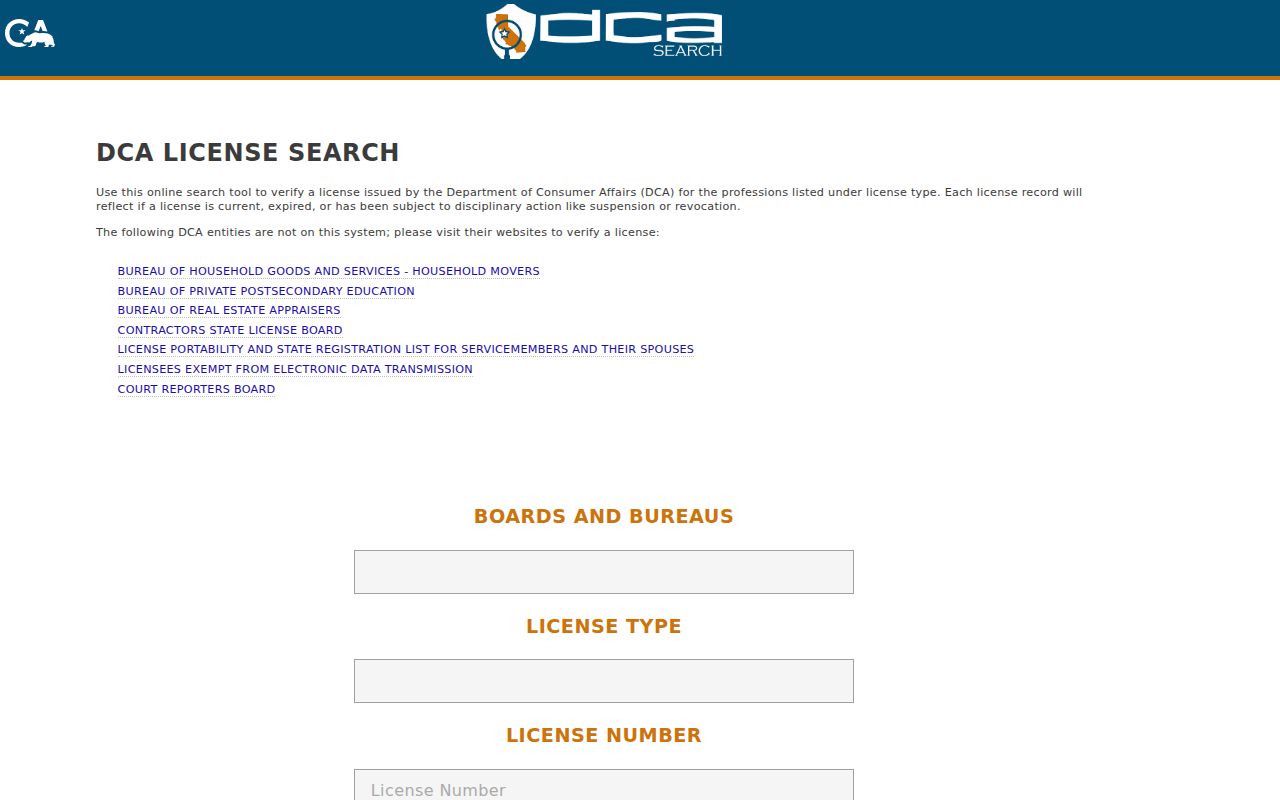
The DCA result belongs beside a name, city, board, or license number anchor.
The DCA Advanced Search adds board or bureau, license type, city, county, and status filters. Use it when a common name produces too many results.
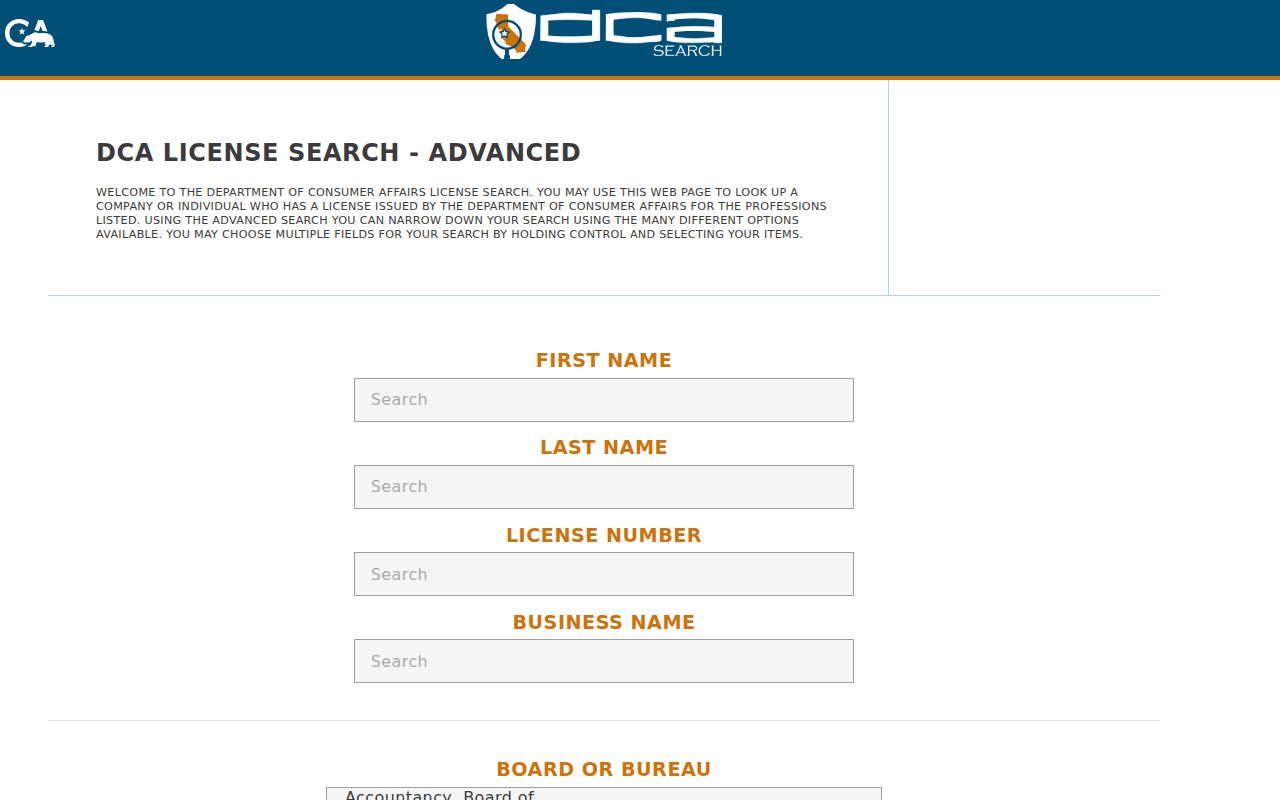
Advanced filters narrow a professional-license lead; they do not establish a current residence.
The State Bar licensee search is a separate professional-record route. Its license status and public discipline information should be read from the Bar rather than inferred from a business address.
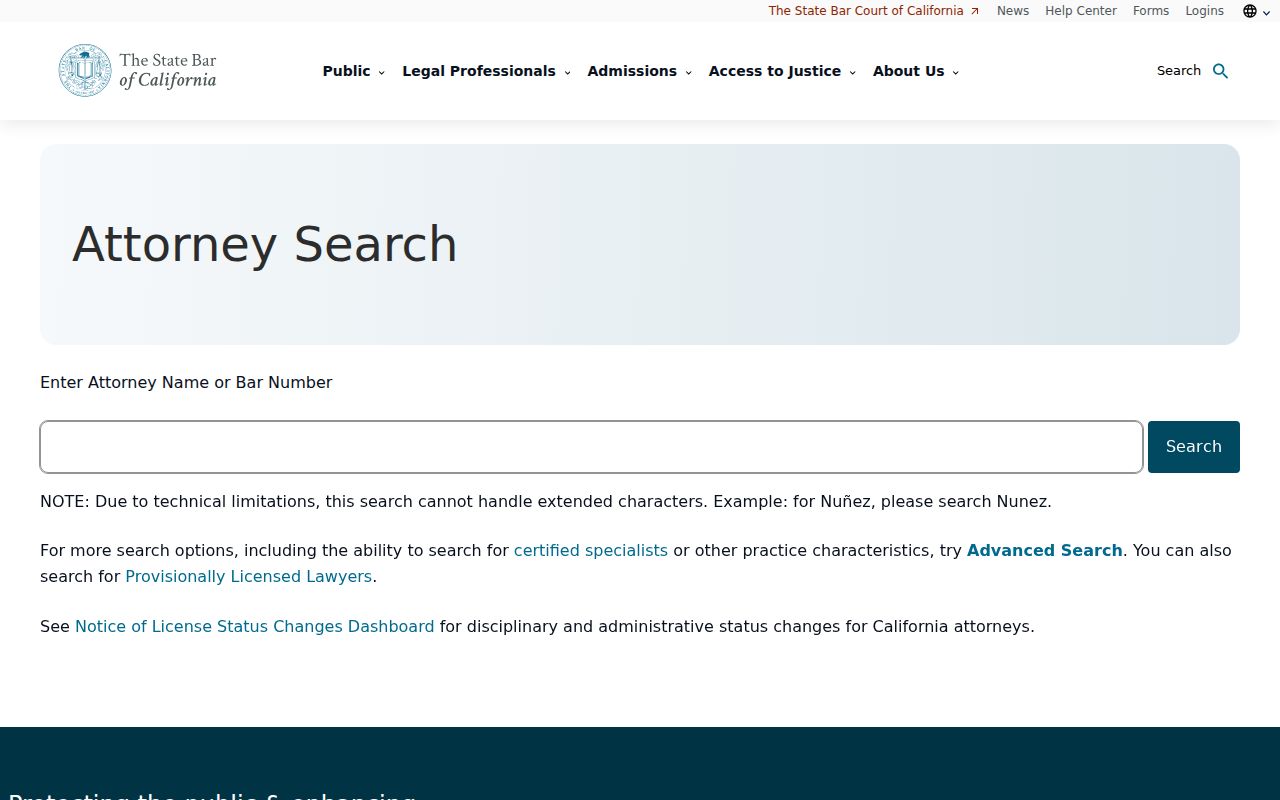
The Bar image supplies a second professional anchor for a name-based lookup.
Mountain View Resident Probate Indexes
Santa Clara County open-data indexes add depth when a modern search ends. County Wills contains roughly 10,000 wills from the early twentieth century through the 1970s, with bulk coverage after 1940. Its fields include surname, given name, residence, date, and notes. County Probate Cases contains about 2,100 cases from May 1893 through September 1908 plus voucher sets. Coroner Inquests index roughly 9,600 reports from 1891 through 1932, including name, age, birthplace, residence, death date and cause, and volume or page.
These are leads to archival files, not a claim that every Mountain View resident appears. Pair a will or probate name with an obituary, residence, property inventory, or court date. The County Naturalization Index adds about 8,000 entries from 1850 through 1934, but the actual file may be held at Superior Court or in a microfilm collection.
The County Wills index is shown in the first image. The linked probate collection gives a separate archival route.
The California State Controller’s unclaimed-property search can add a dated name clue when an estate or beneficiary trail reaches dormant property. It is a state-held claim lead, not proof of a Mountain View address.
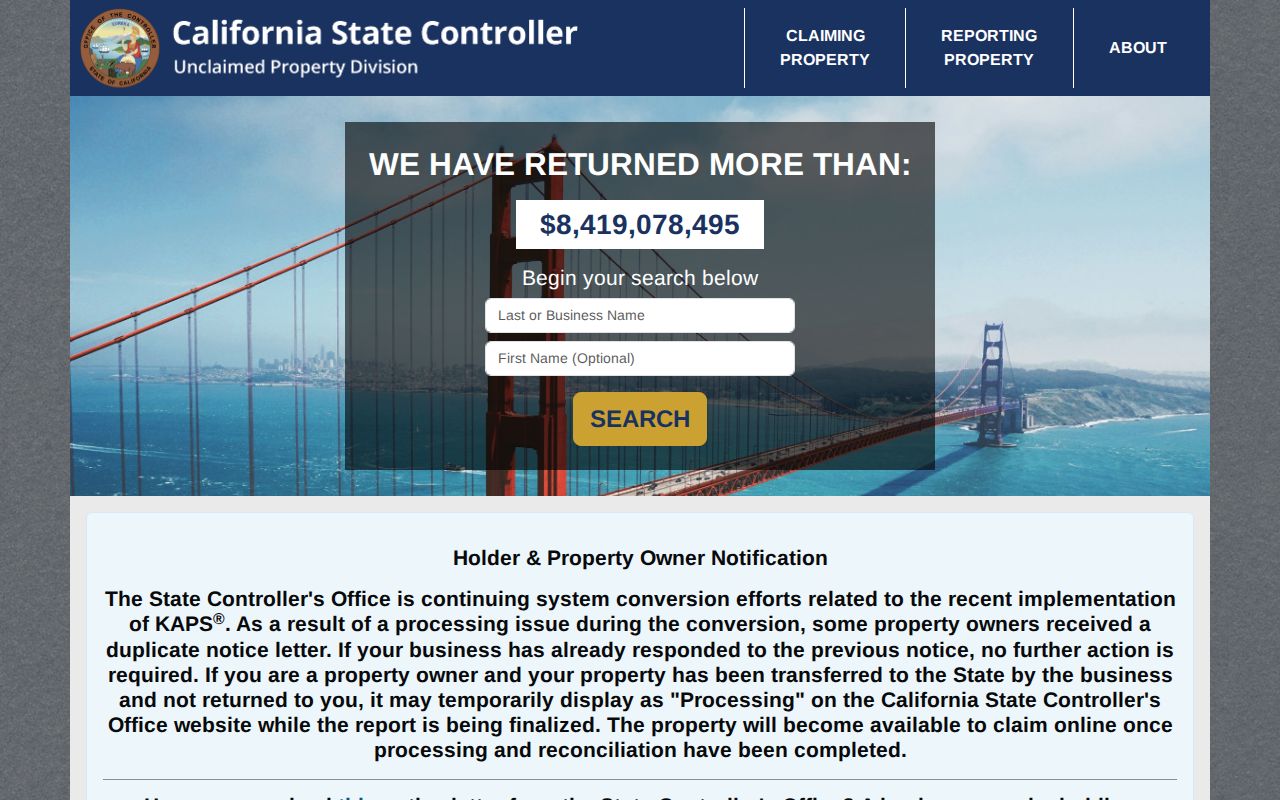
Record the holder name, reported city, property type, and claim instructions separately from a probate index result.
The Santa Clara County Probate Cases index is the source represented by the next image. Pair its case lead with a residence, date, or estate document before drawing an identity connection.
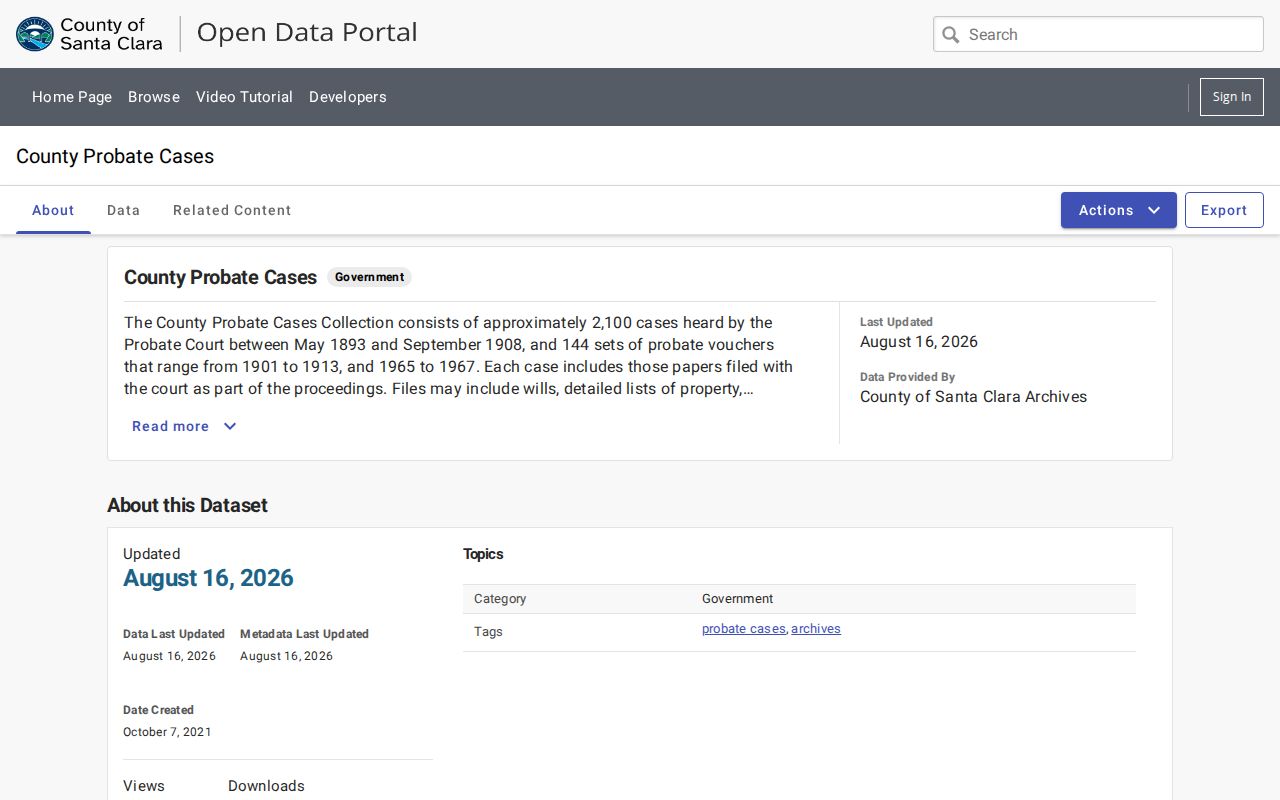
Probate evidence can identify heirs and estate events, but the index is not a present-day directory.
Mountain View Resident Court Scope
When a person’s name appears in a local court portal, use the case type and jurisdiction to decide what to do next. The Santa Clara portal has civil, criminal, family, probate, and traffic categories. Federal cases belong to the Northern District of California and PACER. A court record can show a party role or event without proving where that person lives now.
Santa Clara’s criminal case index and copy-request page explains the January 1, 2026 public-terminal route under AB 1524. An entitled viewer may photograph an electronic record displayed on a public terminal, subject to the court’s rules.
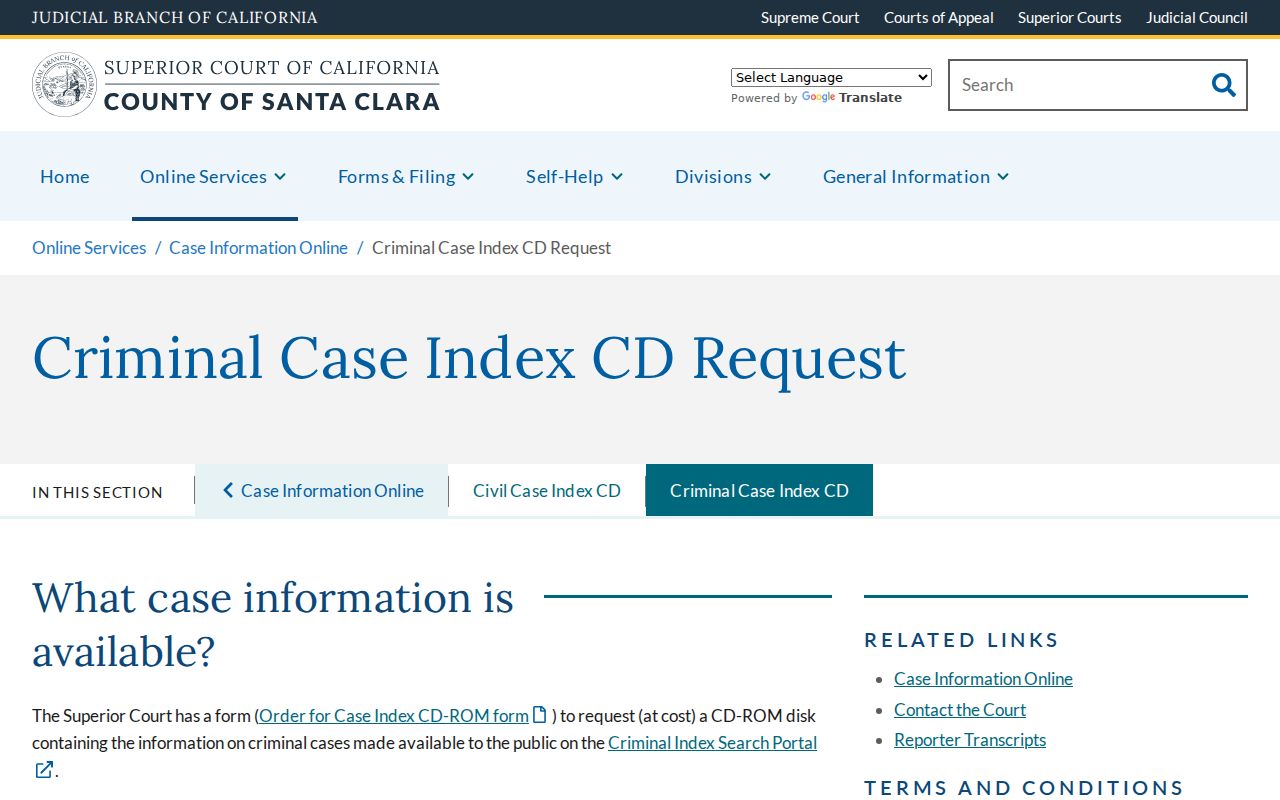
This court-specific access change is different from a general online name search. Confirm entitlement and the record’s access status with the court.
Specialized custody and registry tools have the same boundary. The CDCR locator uses a CDCR number or first and last name, with age-range sorting. It can return location, admission date, commitment county, and parole-eligible timing. The BOP locator is federal and generally begins in 1982. The Megan’s Law site has statutory exclusions and its own use warning. A Mountain View Police report request uses the Police Records Unit or NextRequest and may be limited to named involved parties.
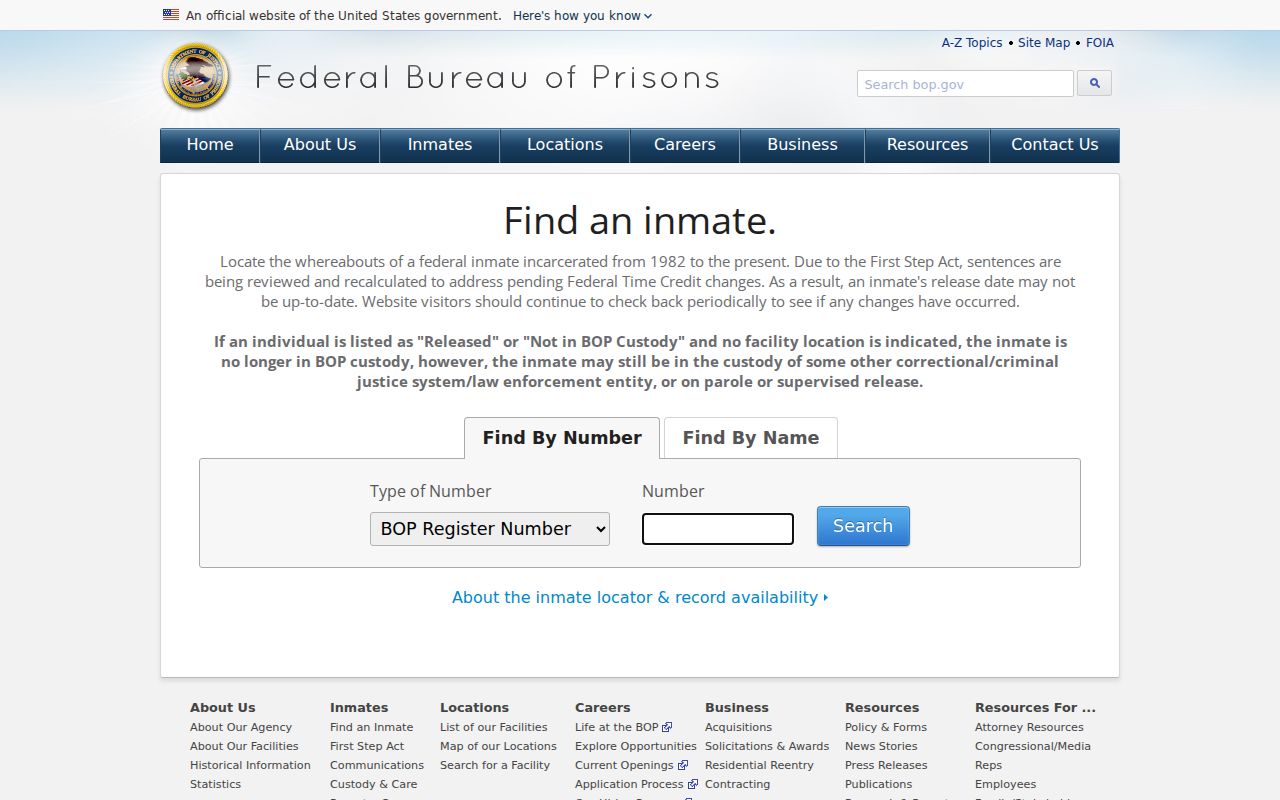
The state locator is a narrow custody source, not a replacement for a court search or resident directory.
Mountain View Resident CPRA Fallback
The California Public Records Act is a fallback for an identifiable record of a state or local agency. A request should name the department, address or project, date range, record type, and preferred format. Government Code sections 7920.000 through 7931.000 govern the current codification. Section 7922.535 requires a disclosure determination within 10 days, with written notice allowing up to 14 additional days in unusual circumstances. That is not a production deadline.
Inspection is generally free. An agency may recover direct duplication costs and, for certain electronic extracts, permitted programming or data-compilation costs. Exempt portions should be separated from material that can be disclosed. A CPRA request cannot override a confidential vital record, sealed court file, voter purpose rule, Safe at Home address, or private association record.
The statutory determination rule is linked to the image. It is a useful timing reference when a Mountain View search has reached the actual custodian.
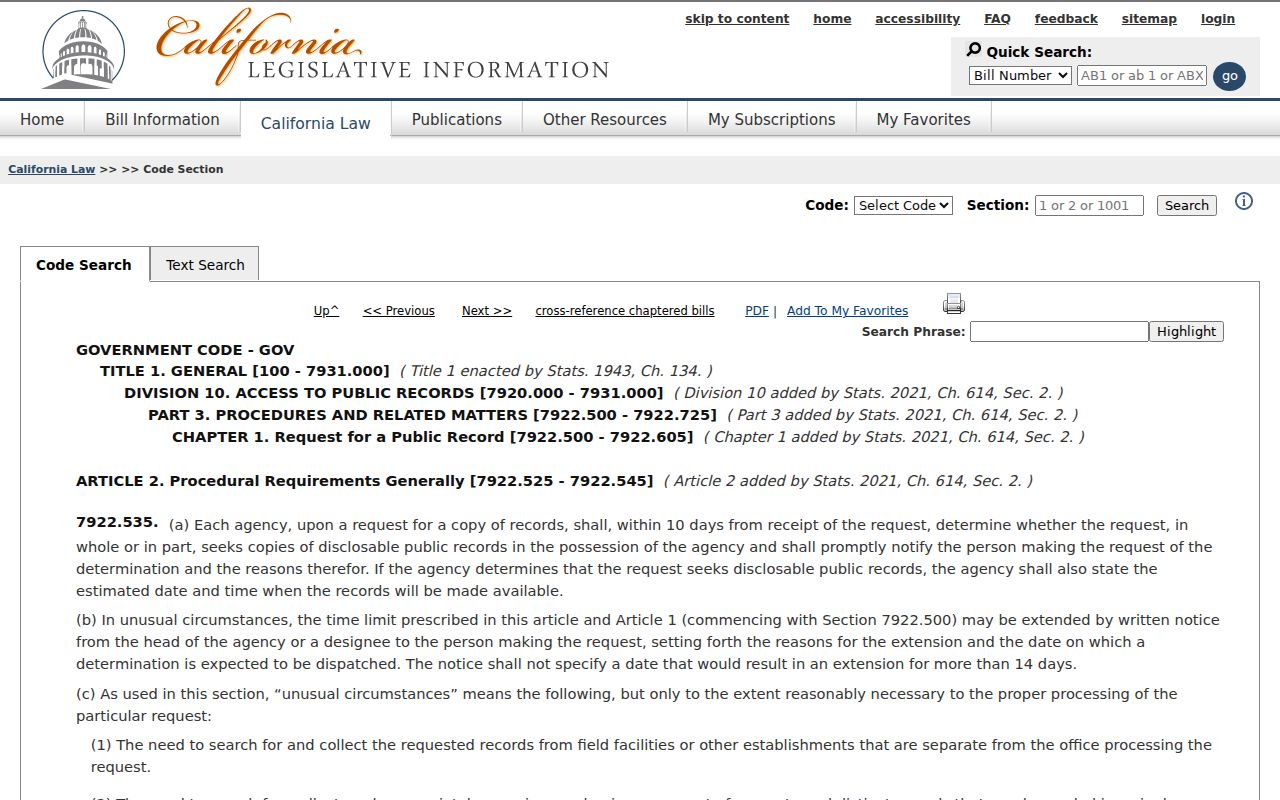
A request works best when it asks for a known record rather than every document about a person.
Verify a Mountain View Resident’s Record
The final verification step should make the source, date, and limitation visible. A name hit is not enough, and a public result does not remove the duty to respect a confidentiality rule.
- Write the exact claim: “party in a case,” “listed at an old address,” “professional license,” or “relative named in probate.”
- Collect the first record’s anchor, such as case number, APN, license number, filing date, or clipping call number.
- Use an independent custodian to test the match. Keep the old and current eras separate.
- Order a certified copy only when the official process allows it and the copy type fits the question.
- Stop at a sealed, confidential, protected, or purpose-restricted record. Do not infer missing data.
- Docket
- A court’s case record or event history, not always the complete file.
- Index versus image
- An index points to a record; an image or certified copy is the underlying document channel when available.
- Certified copy
- A custodian-issued copy with formal certification. An informational copy may not establish identity.
Lawful use. A Mountain View resident lookup is for lawful personal research, family history, civic records, and safety awareness. Never use a record to stalk, harass, intimidate, or harm anyone.
That boundary is part of a reliable search. It protects people who use Safe at Home, people named in sealed records, and anyone whose absence from a public index reflects a rule rather than a mistake.