
Sources for Mountain View Previous Residents
The backward trail is strongest when each source owns a distinct era or fact. Deeds supply legal parties. Directories supply listed occupants. Census schedules supply households on a dated schedule. Maps show land and building form. Newspapers and obituaries explain movement or death. The table keeps those roles visible.
| Source | Years it covers | Where held | What it shows |
|---|---|---|---|
| Recorder deeds and maps | 1850-present; Digital Reel 1850-1980; workstation 1981-present | Santa Clara Clerk-Recorder | Legal owners, parties, descriptions, transaction records |
| Polk county and suburban directories | Selected 1949/50-1955 | Research libraries and microfilm | Listed name, address, occupation, spouse clues |
| Standalone Mountain View Polk | 1962-1968 across listed libraries | Santa Clara County Library and SJPL | Listed residents and addresses |
| Haines and Pacific Bell reverse books | Mid-1960s onward; exact annual run to confirm | Library reference collections | Address to listed occupant or telephone clue |
| Federal census | Decennial schedules through public 1950 | National Archives | Household, relationships, age, birthplace, occupation |
| Local newspapers and obituary index | Newspapers 1903-1979; obituaries mainly 1967-2004 | History Center and DigitalReel | Address events, death, relatives, clipping trail |
No one column supplies a complete house history. The strongest previous residents research records the source, date, access channel, and uncertainty beside each name.
Mountain View Previous Residents APN
Search the current situs address in the Santa Clara Assessor Real Property Search. Save the APN, transfer date, document reference, assessment values, exemptions, and tax-rate jurisdictions. The Assessor uses the physical property address or APN, not a name-only query. Online results intentionally omit assessee names, so the first hit identifies land rather than a complete household.
The property’s legal description is the durable identity. It may describe a lot, tract, record of survey, or metes-and-bounds parcel. A mailing address can differ from the situs and may be a post-office box. Keep those fields separate before searching for previous residents.
Use the Assessor portal to create the starting record, then move to the County Recorder. The Department of Tax and Collections can also provide secured tax bill or status information by APN or property address.
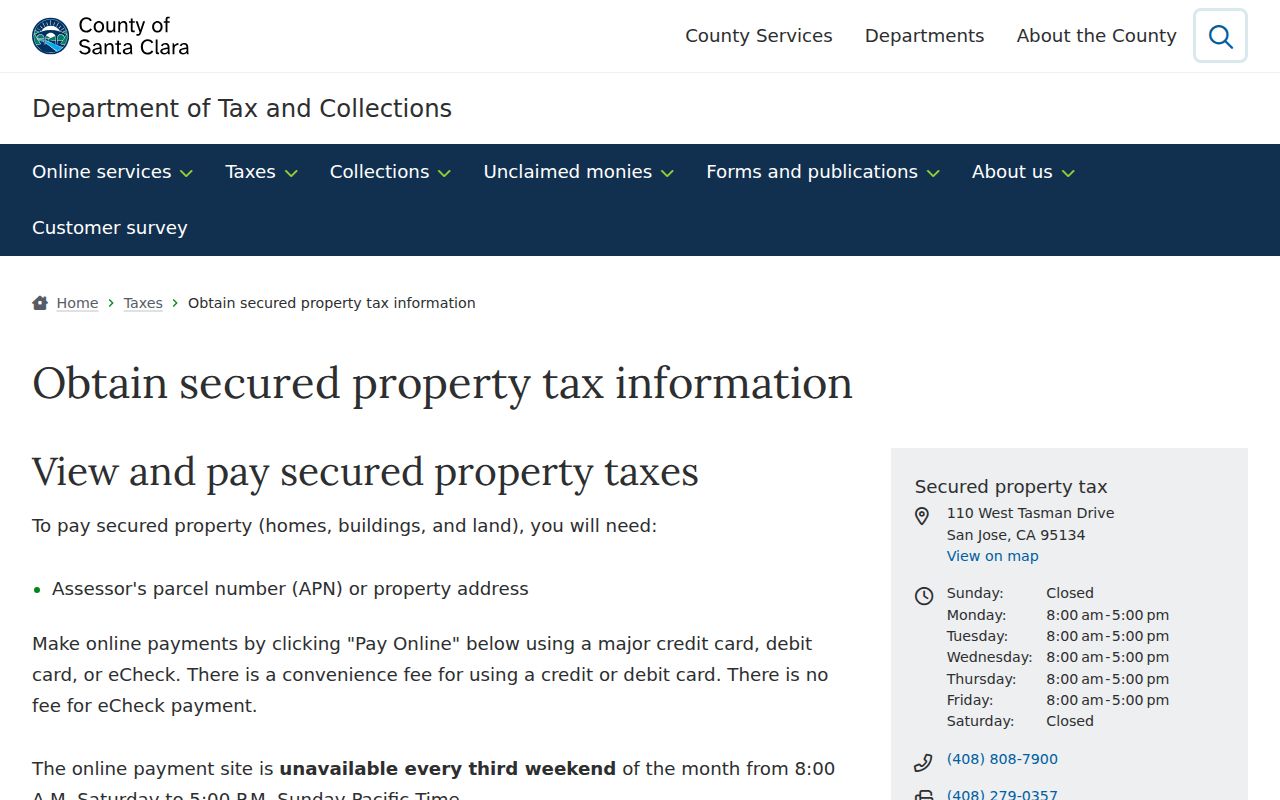
Tax status is a property clue. It is not a substitute for a deed, directory, or household schedule.
Mountain View Previous Residents Deed Chain
Santa Clara County records real-property documents from 1850 forward. The public web grantor-grantee index ended on November 5, 2018. At the Recorder, public workstations search 1981 to the present by name, document or instrument number, or book and page. Digital Reel covers documents and maps from 1850 through 1980. Neither address nor APN is a Recorder index key.
- Search the acquisition document using the current transfer reference, known party, instrument number, or book and page.
- Read the grantee or buyer, grantor or seller, recording date, legal description, document type, and identifiers.
- Take the seller’s name and search that person as an earlier grantee in the prior period.
- Repeat the seller-to-buyer move while recording every gap, spelling variant, and legal-description change.
- Cross-check the owner periods with directories and census schedules to identify listed occupants.
Grantor means the party conveying an interest. Grantee means the party receiving it. A chain of title is the linked sequence of transfers, while the legal description tells you whether each instrument concerns the same land.
Copies can be ordered at office kiosks, by email for a paper copy, or by mail to the Business Division. The County lists $4 for the first page, $2 for each additional page, and $2 for certification per document, with separate card charges. It estimates up to seven business days.
Mountain View Previous Residents Online Limits
The absence of a web grantor-grantee search is a practical limit, not evidence that the prior record vanished. A visitor can use the office workstation, Digital Reel, a written copy order, or staff directions about a known document. The office asks the researcher to supply a document number, recording date, or party and year combination; it does not perform the whole title chain.
Pre-1994 references commonly use book and page. Older maps can be indexed by volume and page, and the County Map Books index about 5,900 maps from roughly 1850 to 1957 in 108 volumes. Archives lists gaps in its volume sequence, so a missing archive entry should trigger a Recorder check.
The official-record access page and the California State Archives county-record guide are connected to the image below. They document the counter, archive, and copy routes that a house-history search needs.
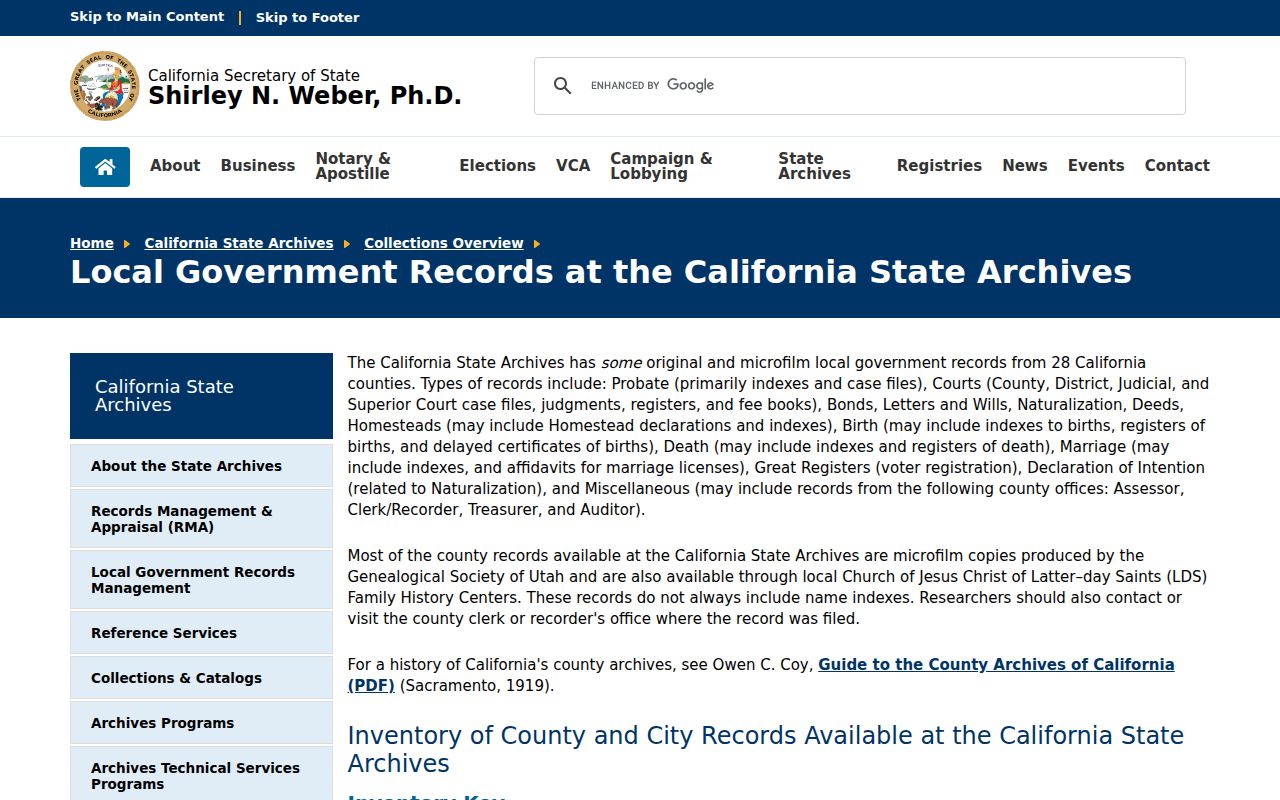
The archive image reinforces the date range and fallback channel. Record the source’s own index limits before interpreting a gap.
Mountain View Previous Residents Households
Ownership and occupancy split apart as soon as the deed chain reaches a period when the owner was not the listed occupant, an absent owner, or a multi-family address. Polk alphabetical entries can show a listed person, address, occupation, and sometimes a spouse clue. Haines or Pacific Bell reverse books can move from an address to a listed occupant. The 1950 census can show a household’s relationships at one date. Each source adds a different layer.
The full city-directory collections have their own shelf and gap pattern, including selected Polk county runs, standalone Mountain View volumes from 1962 through 1966, library coverage through 1968, and reverse forms from the mid-1960s onward. The Mountain View city directory collections page carries the detailed shelf information; a previous residents search should use those books without rebuilding their entire catalog.
Pair a directory address with the NARA 1950 census search. Mountain View is divided among street-defined Fremont Judicial Township enumeration districts, including 43-15 through 43-19. A directory can identify the street and approximate year; the schedule supplies a dated household view.
The census resource is best read as one point on a timeline, not as a current list of the address.
Mountain View Previous Residents Sanborn Maps
The Library of Congress digitized an eight-sheet June 1908 Mountain View Sanborn edition. The City’s historical bibliography identifies editions for 1888, 1891, 1897, 1904, 1921, 1943, and 1956. The History Center’s physical 1921 atlas was updated into the late 1950s by pasting revised pieces over the original sheets.
Sanborn sheets show building footprint, materials, use, and block structure. They do not prove who slept in the building. Use them to check whether an address, lot, or structure could have continued through an older directory or deed. The 1876 atlas and the Public Works block book add roads, subdivisions, owners, paving segments, contracts, and technical street maps.
The Library of Congress Sanborn collection is the free route. A map can explain a changed lot or street while the Recorder and directories supply names.
The County Map Books index illustrates the land-history layer. It should be paired with a name-bearing record.
The County Map Books source covers roughly 5,900 maps from about 1850 to 1957 across 108 volumes. Use its map index to test an old lot, subdivision, or street reference before returning to the deed chain.
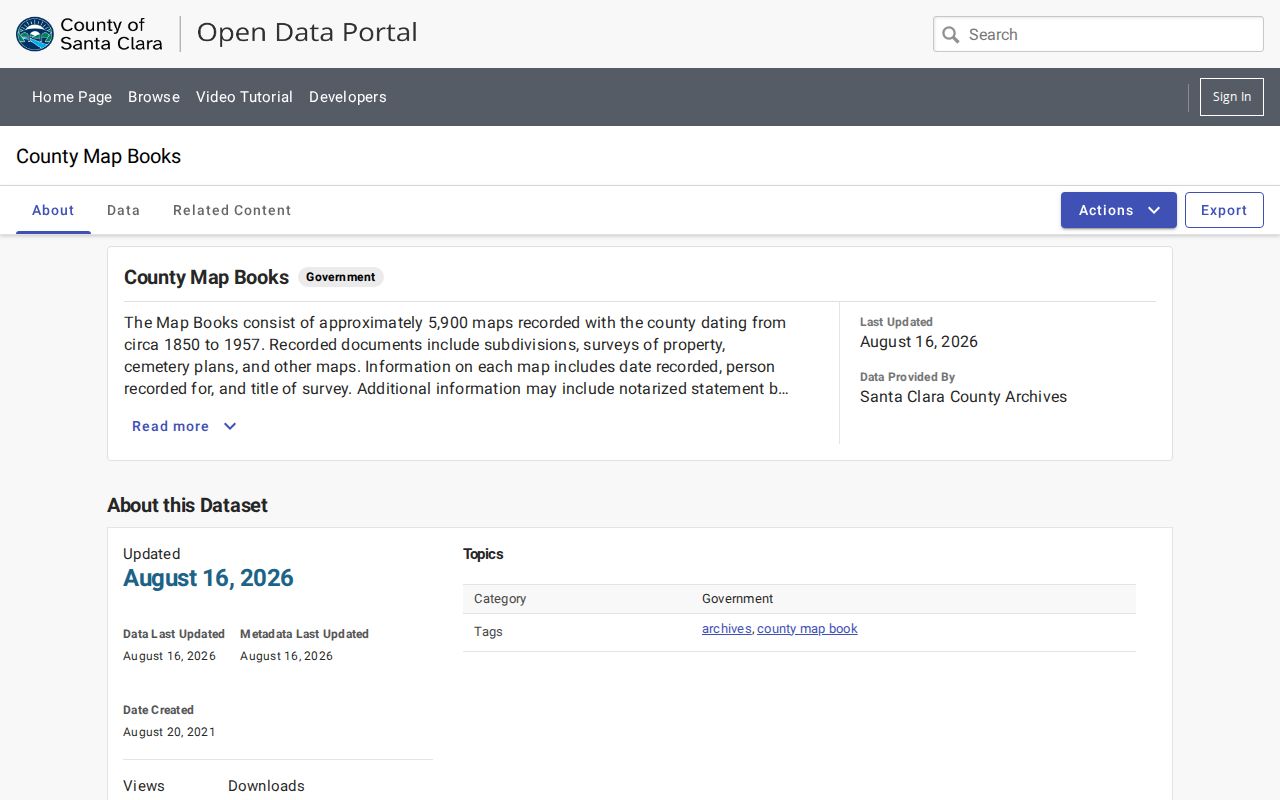
The map-book image supplies land context; it does not identify the people who occupied the mapped structure.
Mountain View Previous Residents Street Names
Pastoria Avenue became Rengstorff Avenue in 1929. That change is a concrete trap for previous residents research. A directory, map, or newspaper before the rename may not match a later search for the same corridor. Search both names and compare cross streets, lot descriptions, and map context.
Mountain View’s Addressing System can also connect an old label to a present address. The owner submits affected APNs, a site plan, present and deleted addresses, added addresses, and the reason for the change through ePermitsMV. The City then updates emergency addressing and notifies USPS, the County Assessor, utilities, and departments. The research lists three-week processing and separate fees for small residential and multifamily or nonresidential changes.
An address-change file is evidence of an official addressing event. It does not identify every prior resident. Use it to choose the right deed, directory, or newspaper search.
Mountain View Previous Residents Probate Trail
Obituaries and estate records can close a previous residents trail when the address itself no longer leads forward. The History Center obituary index covers mainly 1967 through 2004 and records the deceased name, newspaper and date, other persons mentioned, and a clipping call number. Search an heir or spouse as a mentioned person, then read the clipping onsite.
County Wills contains roughly 10,000 wills from the early twentieth century through the 1970s, with bulk coverage after 1940. Fields include surname, given name, residence, date, and notes. County Probate Cases covers about 2,100 cases from May 1893 through September 1908. Coroner Inquests index about 9,600 reports from 1891 through 1932, including residence, death date and cause, and volume or page.
These datasets are archival leads. A will can name heirs and residence; a probate file can contain a property inventory; an inquest can identify a person and place. None proves that every name in the file occupied the address.
The Santa Clara County Wills collection is the source represented by the first image. Its residence and date fields can anchor a previous-residents trail to a probate lead.
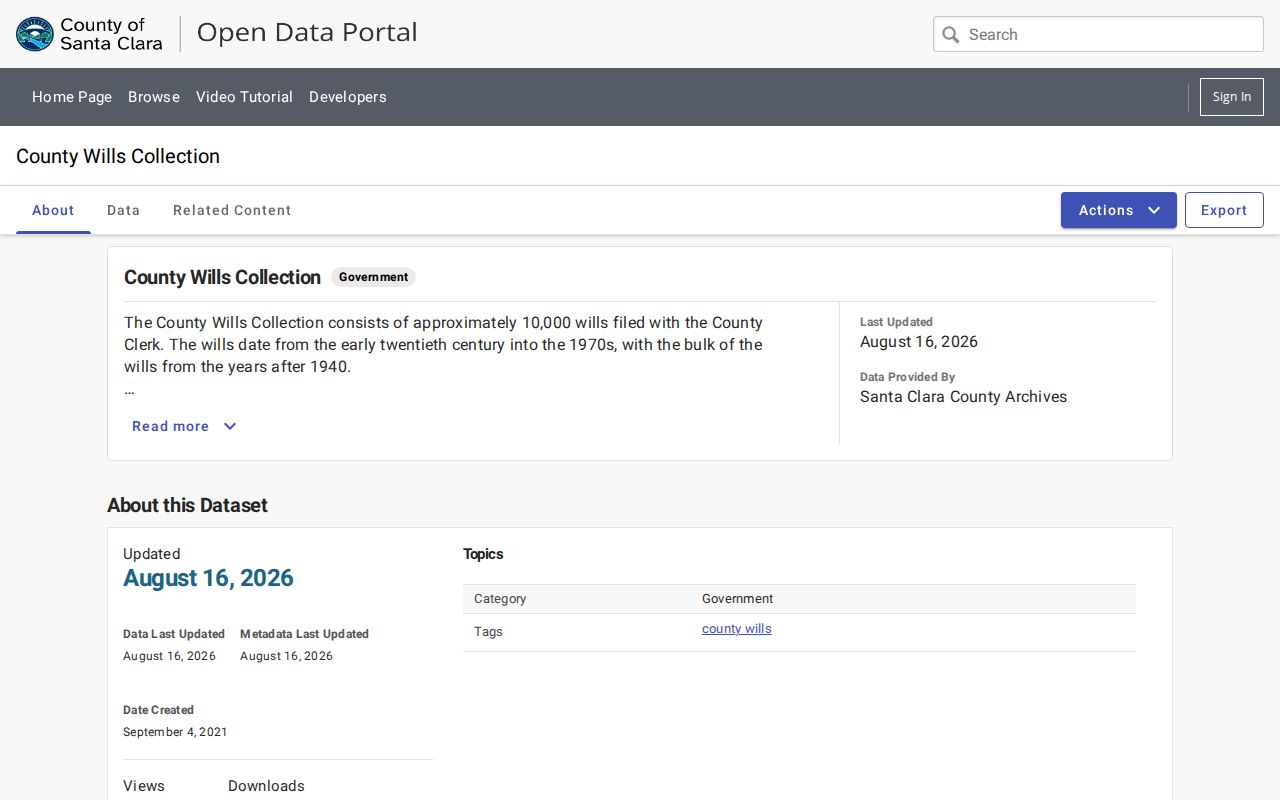
The wills image shows a searchable archival lead with residence and date fields.
The Santa Clara County Coroner Inquests collection is the dated endpoint shown in the second image. Check its volume or page reference before requesting the underlying file.
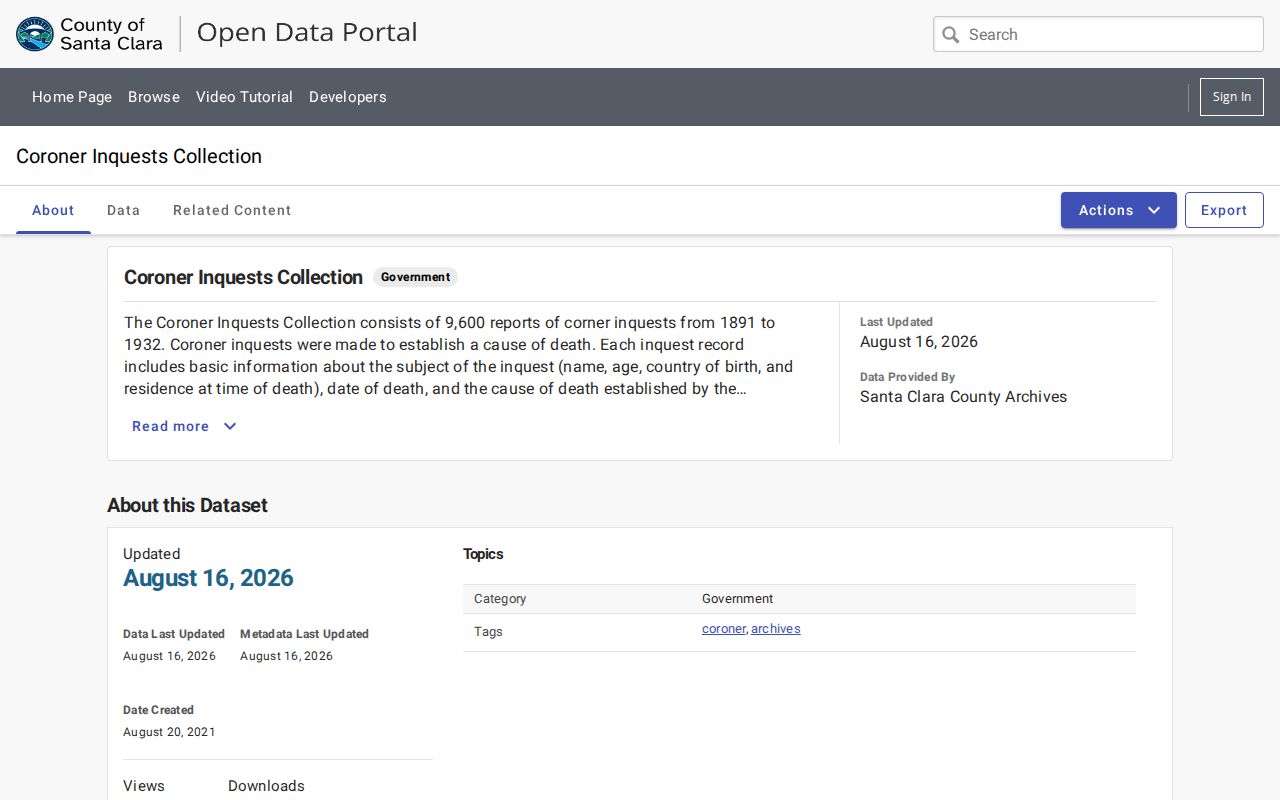
An inquest index supplies another dated endpoint, but the underlying file remains the authority.
Mountain View Previous Residents Archives
Santa Clara County began on February 18, 1850, so early county record series can reach the statehood era. The County Archives catalog is appointment based. Oaths of Office Book A indexes 219 oaths, notices, and bonds from 1850 through 1854, naming early recorders, assessors, sheriffs, notaries, judges, constables, surveyors, treasurers, and tax collectors. It is an unusual people index because it names the officials who created the records.
County Archives also holds historic collections that can help explain a street or record gap. A map-book sequence may have explicit volume gaps. The Recorder is the fallback when an archival catalog does not show a needed book. A researcher should not turn an archive omission into a claim that a deed, map, or resident never existed.
The County Archives catalog is linked below. Make an appointment when the record series, name, and date are clear.
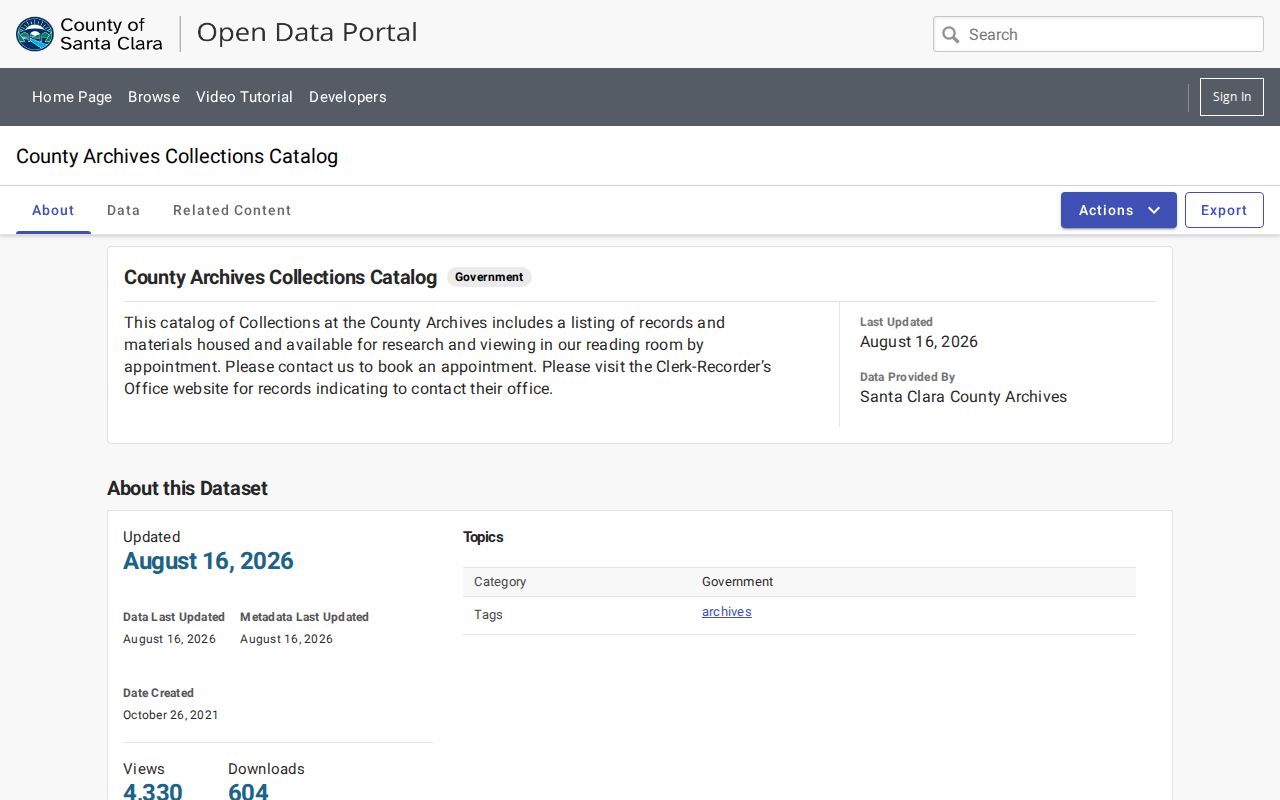
The archive catalog adds a public finding aid, while the custodian’s file supplies the full context.
Mountain View Previous Residents by Era
A repeatable house-history process keeps one address from becoming a pile of disconnected names.
- Current parcel: Assessor address to APN, transfer reference, and legal description.
- Owner chain: current deed to grantor, then grantor as an earlier grantee at the Recorder.
- Occupant layer: directory name to address, reverse directory to listed occupant, and census to household.
- Building layer: Sanborn, map book, permit, and address-change file to structure and street continuity.
- Trail endpoint: newspaper, obituary, will, probate, or inquest to explain a move, death, or estate event.
Use a worksheet with columns for date, source, name, address, role, and confidence. A blank year stays blank. A change in street name stays visible. The point is not to manufacture a smooth story, but to make each previous resident claim traceable.
Mountain View Previous Residents Privacy Limits
House history has hard limits. A deed cannot show every occupant. A directory can omit a household or use an old number. A census is a single date. A map shows structures, not people. A probate index is not the complete file. Renters, roomers, children, and unlisted residents can disappear from a public trail without having disappeared from the house.
Lawful house history. Use previous residents records for family history, preservation, property curiosity, and documented civic research. Do not use an address trail to stalk, harass, intimidate, or harm anyone.
When the question is current rather than historical, the Mountain View by-street directory handles present address records. When the question is one person, use the resident lookup and follow its record-specific limits. The past-residents trail ends where the custodian’s access rule begins.